

Uyuni Salt Flats: A Complete Guide to Bolivia’s Largest Salt Desert
The Uyuni Salt Flats, or Salar de Uyuni, are a roughly 10,582-square-kilometer expanse of white salt crust on the Bolivian Altiplano, the largest salt flat in the world and one of South America’s most photographed landscapes. Sitting at close to 3,656 meters (11,995 feet) above sea level in the Daniel Campos Province of Potosí, the salar turns into a vast natural mirror during the rainy season and cracks into a honeycomb of white polygons for the rest of the year, drawing travelers who come mainly for the scale of the place and the photographs it makes possible.
Most visitors reach the salt flats through Uyuni town or as an extension of a longer South American trip, often built into a full Peru, Bolivia & Chile itinerary alongside Cusco, Machu Picchu, and the Atacama Desert. This guide covers what’s actually worth seeing on and around the salar, when to go, how to get there, and how the day-trip and multi-day tour options compare.
What Is the Uyuni Salt Flats, Exactly?

The Salar de Uyuni formed from the evaporation of a series of prehistoric lakes, leaving behind a salt crust several meters thick that sits over a brine layer rich in lithium. Its surface is flat and consistent enough that space agencies have used it to help calibrate satellite altimeters. Here’s the destination at a glance:
| Location | Daniel Campos Province, Potosí Department, southwest Bolivia |
| Size | Roughly 10,582 km² (about 4,086 sq mi), the world’s largest salt flat |
| Altitude | Roughly 3,656 m (11,995 ft) above sea level |
| Rainy season (mirror effect) | Roughly December to March, peaking in January and February |
| Dry season (clear salt crust) | Roughly April/May to October/November |
| Cost to enter the salar | Free; paid fees apply only to specific stops such as Isla Incahuasi |
| Nearest airport | Joya Andina Airport (UYU), a short flight from La Paz |
Top Things to See and Do in the Uyuni Salt Flats
Most day tours combine several of the following in a single circuit. The colored lagoons and geysers described further down require a longer, multi-day route.
Isla Incahuasi, the Cactus Island
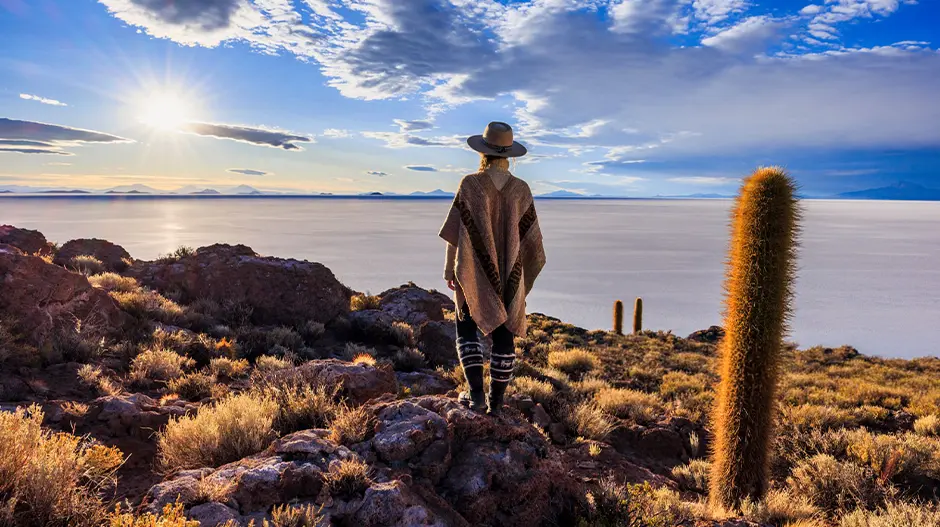
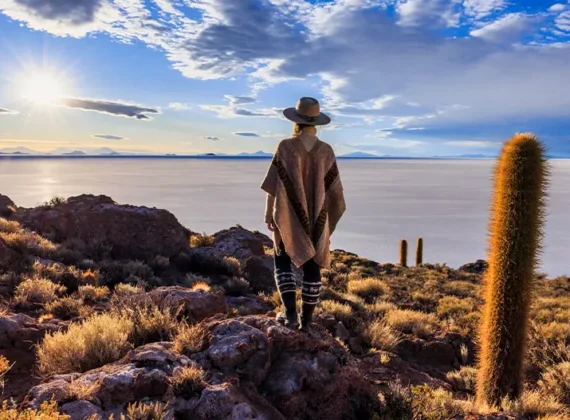
Rising from the flat white expanse near the center of the salar, Isla Incahuasi is a fossilized coral outcrop left over from the prehistoric lake that once covered the region. Its slopes are covered in giant cacti, and a short trail (roughly 30 to 45 minutes) climbs to a lookout point with sweeping views over the salt. Entry costs a small fee, payable in cash on the island (around 30 bolivianos, roughly $4 to $5 USD). Because the trail floods along with the rest of the salar, Incahuasi is easiest to visit in the dry season; during the heaviest rains, typically January and February, it can become temporarily inaccessible.
The Train Cemetery
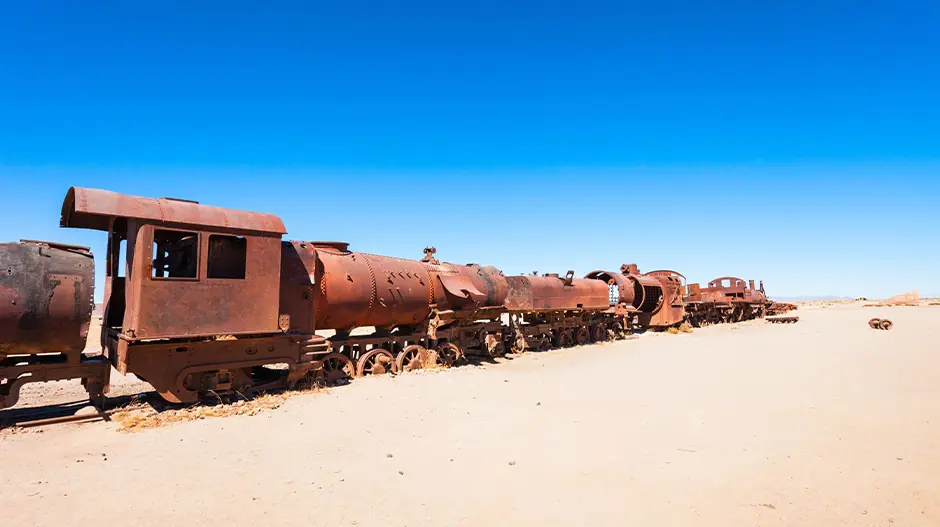
On the outskirts of Uyuni town sit the rusting remains of steam locomotives from the late 19th and early 20th centuries, abandoned once the mining boom that built the local railway collapsed after Bolivia lost its Pacific coastline. Most tours stop here first or last, since it sits directly on the route between town and the salt flat. It’s an easy, low-effort visit and a striking contrast to the white expanse that follows.
The Mirror Effect and Forced-Perspective Photos
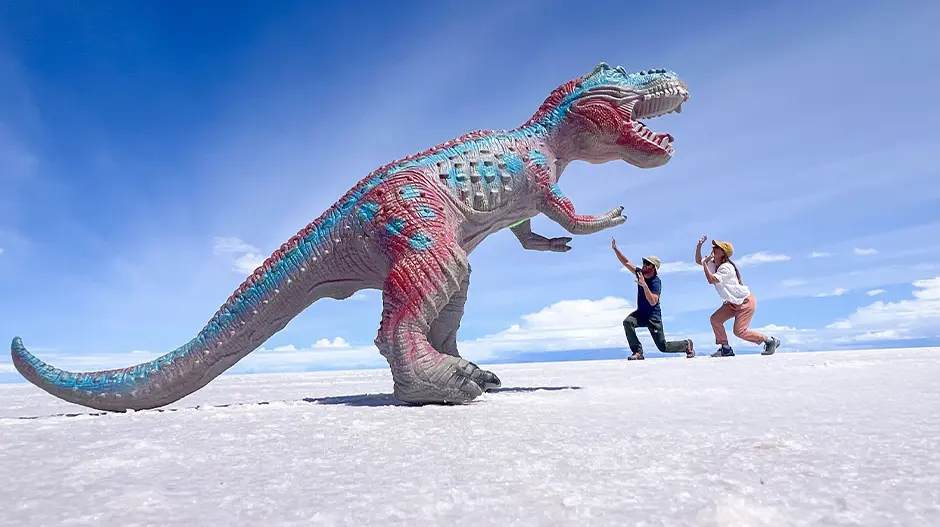
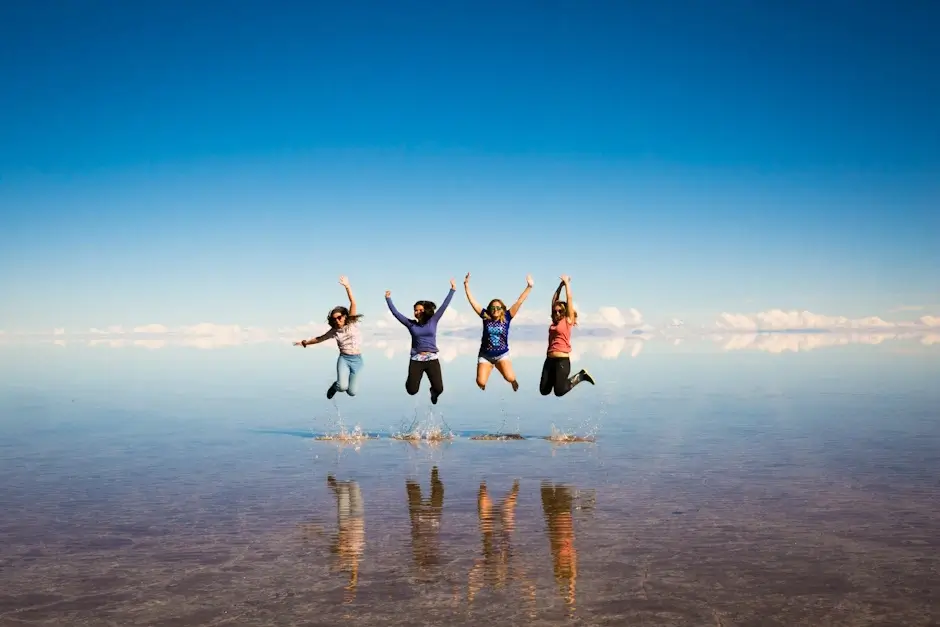
Two very different photographic experiences define a trip here. During the rainy season, a thin sheet of water spreads across the salt and turns the surface into a reflection of the sky. It’s the effect the destination is best known for. In the dry season, with no water to distort the horizon, the flat, featureless white becomes a natural backdrop for forced-perspective shots, where an object placed close to the camera appears wildly out of scale with someone standing meters behind it.
Sunrise, Sunset, and Stargazing
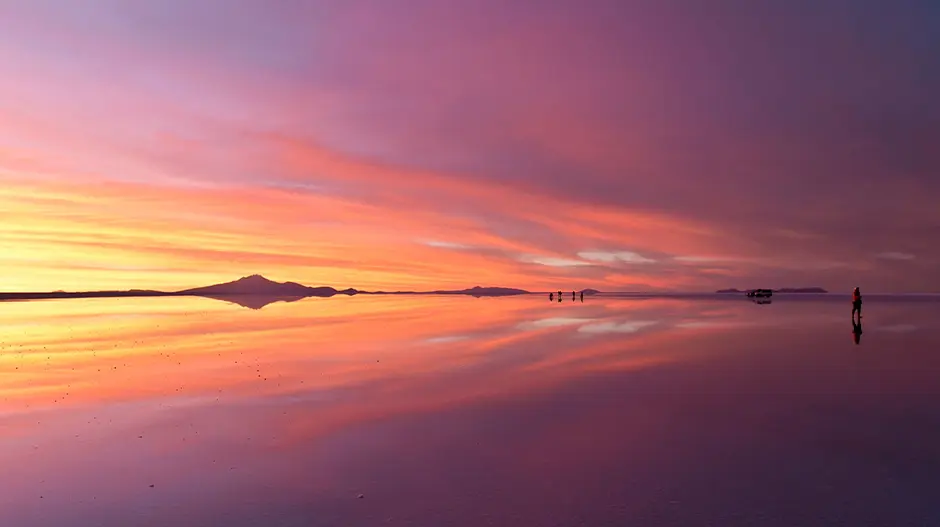
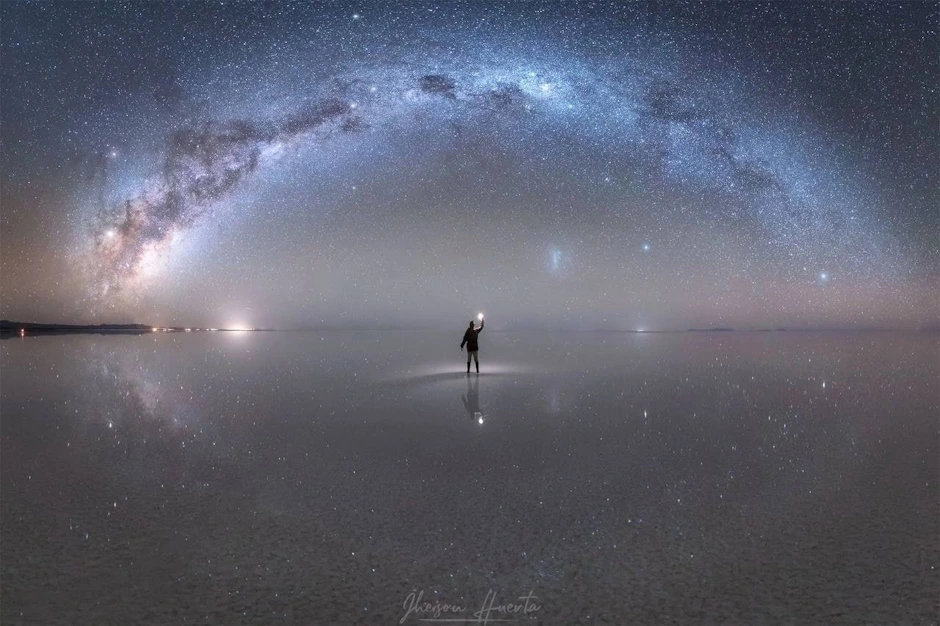
Because there’s no reference point on the horizon in any direction, sunrise and sunset produce a wraparound wash of color that’s hard to see anywhere else. After dark, that same emptiness, combined with minimal light pollution and thin, dry air at altitude, makes for some of the clearest stargazing in South America. A few tour operators run night excursions with telescopes, and a handful of small camps set up geodesic domes on the edge of the salar so guests can watch the sky from bed. Travelers extending their trip into Chile often pair this with stargazing in San Pedro de Atacama, home to some of the world’s most advanced astronomical observatories.
Salt Biking
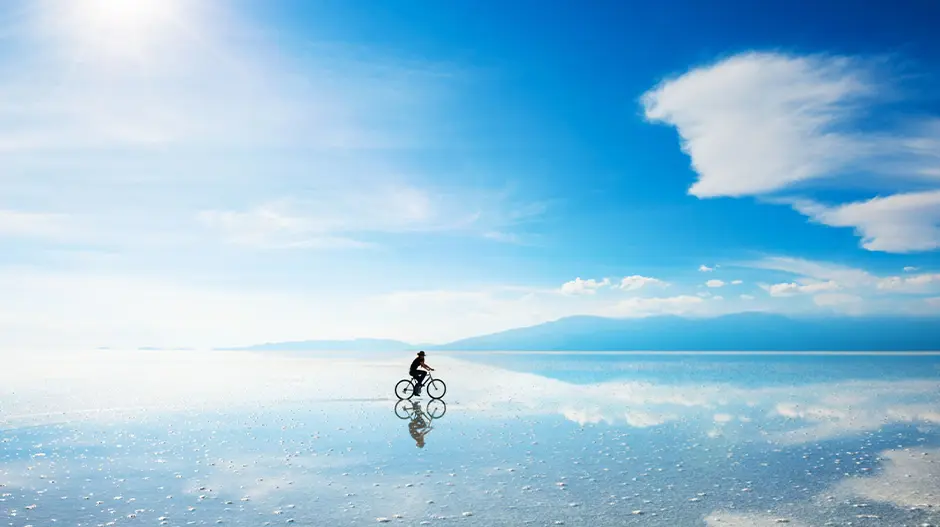
Renting a bike to ride out onto the flat crust is a slower, quieter alternative to the standard 4×4 circuit, and it’s only practical in the dry season, when the surface is solid enough to cover real distance. It suits travelers who want more time alone on the salt rather than a packed sightseeing schedule.
Colchani, the Salt Workers’ Village
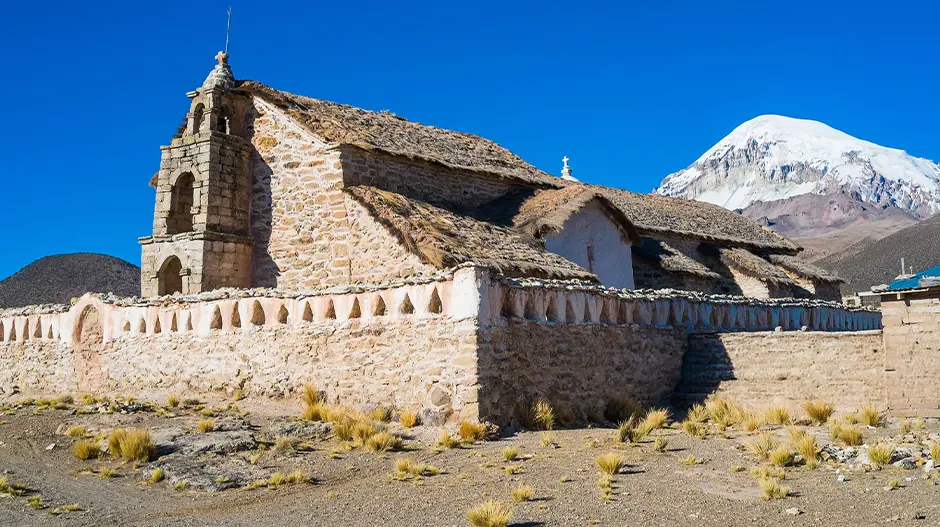
Most tours also stop in Colchani, a small community on the edge of the salar where salt is still harvested and processed by hand. It’s a low-key stop (salt mounds drying in the sun, handmade crafts for sale) that adds some context to a landscape that can otherwise feel completely uninhabited.
Colored Lagoons and Geysers Beyond the Salt Flat
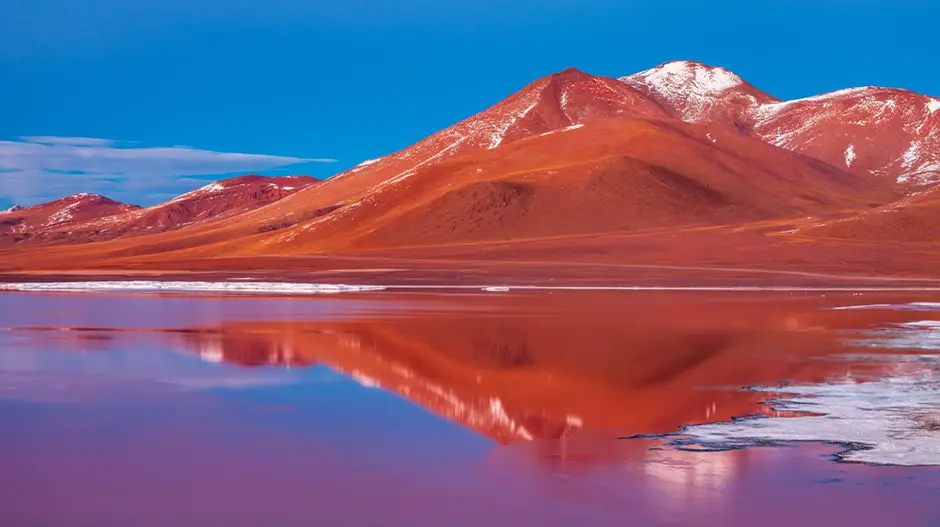
The salar itself is only part of the Bolivian Altiplano’s high-desert scenery. Multi-day tours continue south into the Eduardo Avaroa National Reserve, where Laguna Colorada and Laguna Verde get their red and green tints from algae, minerals, and sediment, and where flocks of flamingos feed in the shallows. The same route usually passes the bubbling fumaroles of the Sol de Mañana geysers and the Polques hot springs, none of which sit on the salt flat itself. Entry to the reserve requires a separate fee (around 150 bolivianos, roughly $21 USD), on top of any island or hot-spring charges, and is generally included only on the longer circuits, not on a standard day trip from Uyuni.
Best Time to Visit the Uyuni Salt Flats
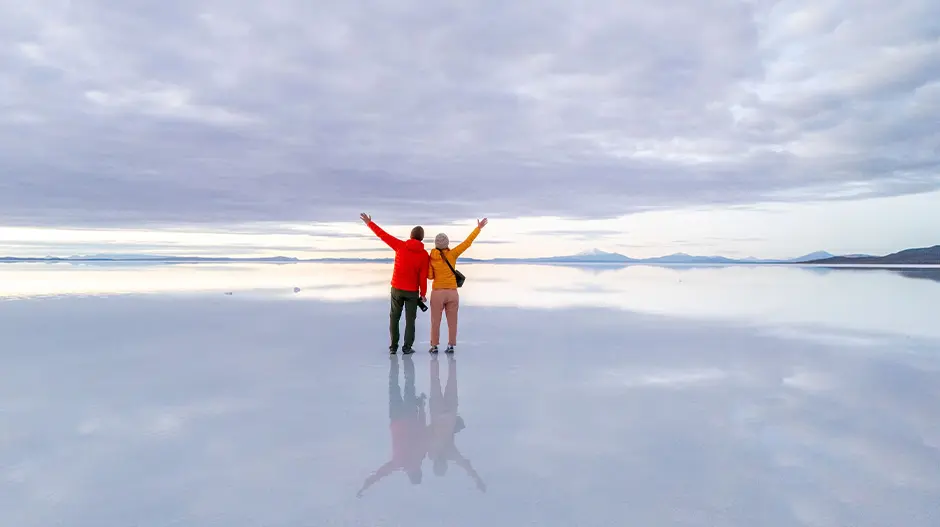
The right season depends on what you want to see. Roughly December through March, seasonal rain covers the salar in a thin layer of water and produces the famous mirror effect, though some attractions, including Isla Incahuasi, can be partly inaccessible at the height of the rains. From around April or May through October or November, the flat dries out into a cracked, brilliant-white surface that’s easier to drive and walk across, and better for clear-night stargazing. For a full month-by-month breakdown, along with flights, buses and travel seasons to Uyuni, see our dedicated guide to the best time to visit.
How to Get to the Uyuni Salt Flats
Uyuni has no international flights, so most travelers connect through La Paz. From there, Boliviana de Aviación (BoA) operates a short flight, about an hour, into Uyuni’s small Joya Andina Airport, a few kilometers outside town. Overland, buses from La Paz take roughly 10 to 12 hours, with shorter routes available from Potosí and Oruro. If you’re arriving from Peru rather than starting in La Paz, the logistics look a little different; we cover the full route, including border crossings and travel times, in our guide to traveling from Lima to the Salar de Uyuni.
What to Wear: Climate Preparation
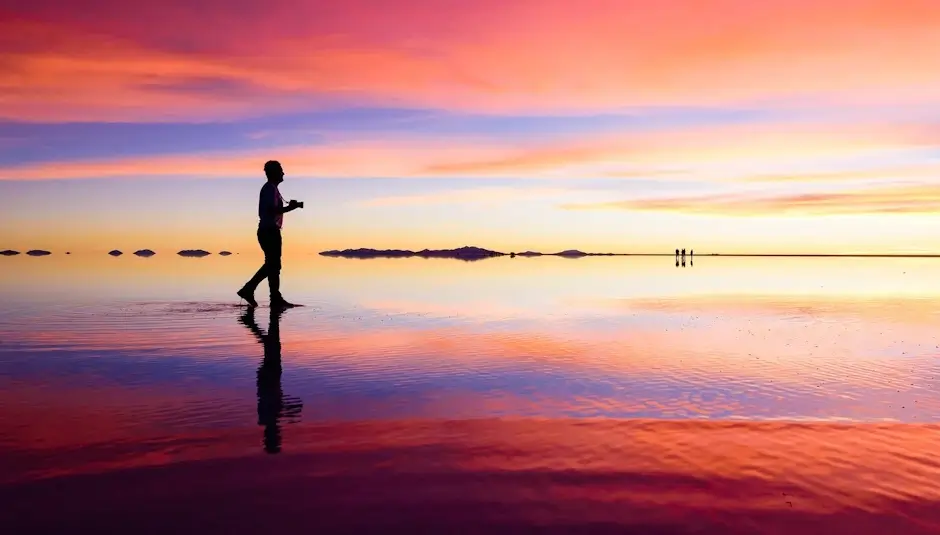
Uyuni sits at roughly 3,656 meters, so days can be intensely sunny while nights drop well below freezing, especially in the dry season. Layering is essential, and strong sun protection matters even on cool days, since the white salt reflects glare from every direction. For a full packing list, including footwear for wet-season conditions, see our guide on what to wear for the Salar de Uyuni.
Choosing a Tour: Day Trip vs. Multi-Day Excursions
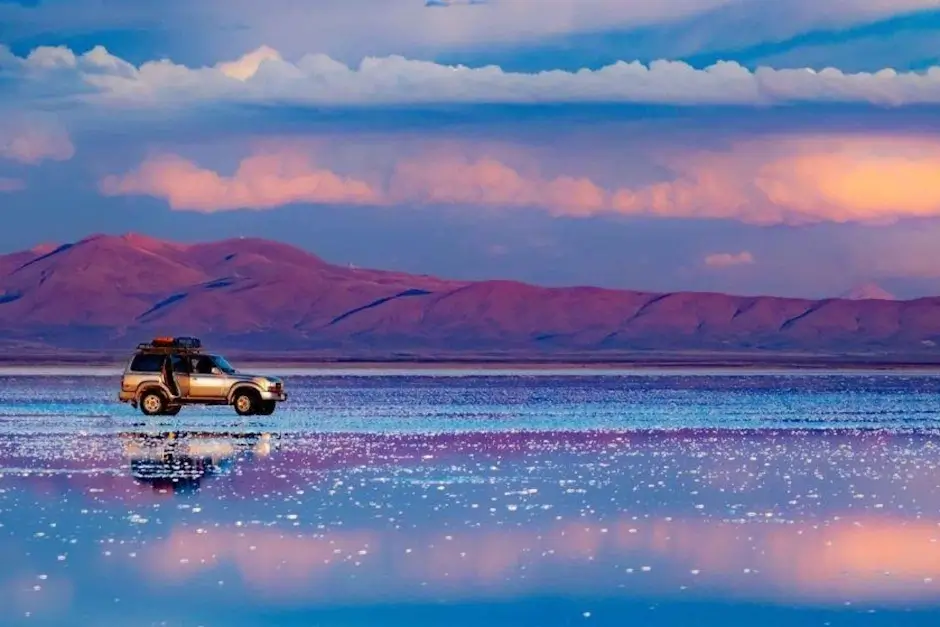
Tours run in three basic formats, and the right one depends on how much time you have and whether you want to see the surrounding lagoons.
| Tour type | Typical length | What it covers | Best for |
|---|---|---|---|
| Sunset tour | About 4–5 hours | Salt flat at golden hour, photo stops | Travelers with only an afternoon in Uyuni |
| Full-day tour | About 8–9 hours | Train Cemetery, Colchani, Isla Incahuasi, salt flat photo stops | First-time visitors who want the highlights in one day |
| Classic 3-day tour | 3 days / 2 nights | Salt flat highlights plus the Eduardo Avaroa Reserve’s colored lagoons, geysers, and hot springs | Travelers who want the full Altiplano circuit |
Prices vary by operator, group size, and season, but shared-group tours starting in Uyuni typically run somewhere around $50 to $90 USD for a single day and $180 to $250 USD or more for the 3-day circuit, on top of entrance fees paid in cash on-site. Private guides, English-speaking tours, and luxury versions of the same routes cost noticeably more. On the multi-day circuit, overnight stays are usually in basic salt hotels (simple lodges built almost entirely from blocks of salt cut from the flat itself) near the edge of the salar or close to the lagoons.
If Uyuni is one stop on a bigger South American trip, a Machu Picchu, Atacama & Uyuni package bundles the salt flats with Machu Picchu and the Atacama Desert into a single planned itinerary, rather than booking each leg separately.
Combine Uyuni with the Rest of the Altiplano
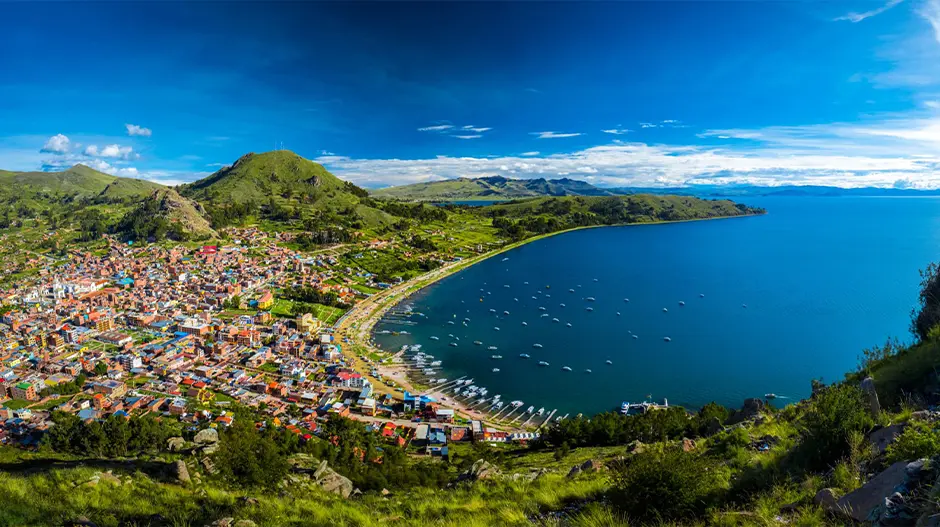
The Salar de Uyuni sits on the same high plateau that runs north into Peru and west into Chile, and it rarely works as a stand-alone destination for international travelers. Heading northeast, many itineraries continue to Copacabana and the Bolivian side of Lake Titicaca before crossing into Peru; heading west, the classic 3-day tour ends in San Pedro de Atacama. A few multi-country routes already build this in:
- Journey to the Heart of the Andes: A 15-Day Adventure from Cusco to San Pedro de Atacama
- South America tour through the Andes of Peru, Bolivia and Chile
- Andean Expedition Exploring the Treasures of Peru and Bolivia
Uyuni Salt Flats: Frequently Asked Questions
Is the Uyuni Salt Flats free to visit?
Yes. The salar itself has no entrance fee. The only charges are for specific stops: around 30 bolivianos (roughly $4 to $5 USD) for Isla Incahuasi, and around 150 bolivianos (roughly $21 USD) for the Eduardo Avaroa Reserve on multi-day routes.
How many days do you need at the Uyuni Salt Flats?
A single full day covers the core highlights (the Train Cemetery, Colchani, and Isla Incahuasi) comfortably. Add two more days if you want to continue into the colored lagoons and geysers of the Eduardo Avaroa Reserve, which isn’t reachable on a standard day trip.
Can you visit the Uyuni Salt Flats without a guided tour?
Independent travel to Uyuni town is straightforward, but exploring the salar itself almost always means joining an organized 4×4 tour: distances are long, there are no roads or signage across the salt, and the remote lagoon circuits require a guide familiar with the terrain.
Is Isla Incahuasi accessible year-round?
Not always. During the heaviest rains, typically January and February, rising water can make the island temporarily inaccessible to vehicles. It’s most reliably open during the dry season.
Does the altitude affect visitors?
It can. The salar sits at roughly 3,656 meters (about 12,000 feet), similar to Cusco or La Paz, so mild altitude symptoms like headache or fatigue are possible, especially for travelers arriving directly from lower elevations without time to acclimatize first. Anyone with a pre-existing heart or respiratory condition should check with a doctor before traveling to this altitude.
For more information and to book your trip, contact us on WhatsApp. Follow us on Instagram for the latest updates and travel inspiration.
CONTACT US:
We are a Travel Agency specialized in tourist packages, if you need any information, do not hesitate to write to us. We offer tours in Peru and Bolivia.