

Huayna Picchu: Complete Guide to Hiking the Mountain Above Machu Picchu
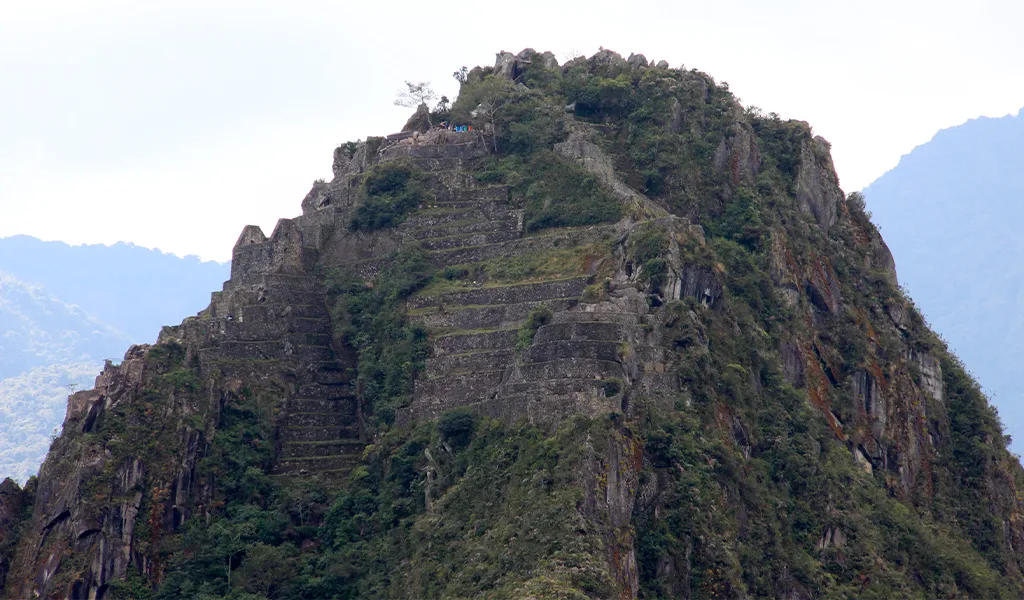
Huayna Picchu is the steep, pointed peak that rises directly behind Machu Picchu in the classic photos of the Inca citadel. Its summit stands at about 2,693 meters (8,835 ft) above sea level, roughly 260 meters higher than the citadel, and the Incas built a stone trail up its side, with terraces and small structures at the top. Climbing it is one of the most sought-after experiences in Machu Picchu: a short but demanding hike on narrow Inca stairways that ends with a bird’s-eye view of the ruins.
Access is limited. To hike Huayna Picchu you need a specific ticket, which is sold in limited numbers each day and tends to sell out, so planning ahead is essential. This guide explains what Huayna Picchu is, what the hike is like, how it compares with Machu Picchu Mountain and what to consider before you go.

What Is Huayna Picchu?
The Meaning of the Name
Huayna Picchu comes from Quechua and is usually translated as “young peak” or “young mountain”. The name contrasts it with Machu Picchu, the “old mountain”, the larger peak on the opposite side of the citadel. In official documents, Peru’s Ministry of Culture uses the spelling Waynapicchu.
Inca History and Structures
Huayna Picchu is part of the Historic Sanctuary of Machu Picchu, in the Cusco region. The Incas built the citadel in the 15th century, and it remained largely unknown to the outside world until Hiram Bingham brought it to international attention in 1911. On the mountain itself, the Incas carved a stone path up the slopes and built agricultural terraces, temples and ceremonial enclosures near the summit. These structures are believed to have had religious and ceremonial purposes, consistent with the sacred role mountains played in the Andean worldview.
Nature on the Mountain
The trail climbs through cloud forest vegetation, with ferns, mosses and orchids growing among the rocks. Birds such as hummingbirds are common, and visitors sometimes spot animals like vizcachas along the way.
The Huayna Picchu Hike: What to Expect

The Trail
The trailhead is at the northern end of the Machu Picchu citadel. From there, the path climbs steeply through forest and Inca stonework toward the summit. Most of the route consists of irregular stone steps, some narrow and very steep, with occasional sections where you may want to use your hands for balance. In most cases, the descent follows the same trail.
The “Stairs of Death”
The most famous section is known informally as the “Stairs of Death”: a series of narrow, steep stone steps carved into the mountain near the top, with sheer drops beside the trail. The name sounds alarming, but it describes the steepness and exposure rather than an unusual danger for visitors who take their time, stay on the marked path and follow the staff’s instructions. For people with a strong fear of heights, however, this part can be genuinely challenging, especially on the way down.
The Views from the Summit
The reward is one of the most impressive views in Peru: the full layout of the Machu Picchu citadel seen from above, framed by the surrounding mountains and the bends of the Urubamba River in the canyon below. Clouds often drift over the ruins, especially in the morning, which can hide the view for a while but also make for dramatic photos.
How Long Does It Take?
The round-trip hike usually takes about 2 to 3 hours, depending on your pace, the number of people on the trail and how long you stay at the top. Keep in mind that your total visit to Machu Picchu is limited to the time and route on your ticket (POR VERIFICAR: current maximum visit time for Circuit 3).
How Difficult Is It?
Huayna Picchu is short but demanding. The steep climb, uneven steps and exposure make it more challenging than the walk through the citadel, although no technical climbing skills are required. It is best suited to travelers in good physical condition who are comfortable with heights. If you have a strong fear of heights, knee problems or limited mobility, Machu Picchu Mountain or the regular citadel circuits may be a better fit.
Huayna Picchu Tickets and Access
Huayna Picchu is not included in the standard Machu Picchu ticket. Under the current system of the Ministry of Culture, it corresponds to Circuit 3 (the “Royalty Circuit”), Route 3-A: Waynapicchu Mountain, which combines the climb with a visit to the lower part of the citadel. Tickets are sold through the official website, tuboleto.cultura.pe, and through authorized travel agencies, with a specific entry time.
- Limited spots: the number of daily visitors is restricted, so tickets sell out weeks or even months ahead in the high season (POR VERIFICAR: current daily capacity for Route 3-A).
- Fixed schedule: each ticket has an assigned entry time. Plan your train and bus around it.
- Alternative route: Circuit 3 also includes the Great Cavern route (Route 3-C), available in the high season, which leads to the area of the Temple of the Moon on the flank of the mountain.
- Other requirements: bring the passport or ID used to buy the ticket (POR VERIFICAR: current minimum age or other restrictions for the Huayna Picchu route).
Huayna Picchu vs. Machu Picchu Mountain

Both mountains offer views of the citadel from above, but the experience is different:
| Huayna Picchu | Machu Picchu Mountain | |
|---|---|---|
| Location | North of the citadel (behind it in classic photos) | South of the citadel |
| Approximate altitude | 2,693 m (8,835 ft) | About 3,050 m (10,000 ft) |
| Trail | Shorter, very steep, narrow stone steps and exposed sections | Longer climb on a wider path, with less exposure |
| Views | Close-up view of the citadel from above | Higher, wider panorama that includes Huayna Picchu |
| Ticket | Circuit 3, Route 3-A | Circuit 1, Route 1-A |
Choose Huayna Picchu if you want the iconic close-up view and don’t mind steep, exposed stairs. Choose Machu Picchu Mountain if you prefer a longer but less vertiginous hike with a broader panorama.
How to Get to Huayna Picchu
Getting to Huayna Picchu means first getting to Machu Picchu:
- Train to Aguas Calientes: trains leave from Poroy station (near Cusco) and from Ollantaytambo, in the Sacred Valley. Compare services and classes in our guide to the train ticket to Machu Picchu.
- Bus to the citadel: from Aguas Calientes, buses go up to the entrance of Machu Picchu in about 30 minutes.
- Walk to the trailhead: once inside, follow the route marked for your circuit to the start of the Huayna Picchu trail.
There are also walking routes to Aguas Calientes from the Hidroeléctrica station. To compare every option, read our guide to transportation options for getting to Machu Picchu.
If you are short on time, a one-day Machu Picchu tour from Cusco includes the train, the bus, the entrance to the citadel and a guided visit. If you want to climb Huayna Picchu as well, check the availability of the specific ticket before booking, since the tour’s standard entrance does not cover the mountain unless stated. To compare other ways to visit, see our overview of Machu Picchu tours.
Best Time to Climb Huayna Picchu
Huayna Picchu is open throughout the year, but conditions change with the seasons:
- Dry season (May to October): sunnier days and drier steps, ideal for hiking. It is also the busiest period, so tickets sell out faster.
- Rainy season (November to April): greener landscapes and fewer visitors, but showers can make the stone steps slippery. Bring rain gear and allow more time.
In any season, check the weather before you go and keep your plans flexible.
Tips for Climbing Huayna Picchu
- Acclimatize first: spend a few days in Cusco or the Sacred Valley of Peru before the hike.
- Prepare physically: regular cardio and leg-strengthening exercise in the weeks before your trip will make the stairs easier.
- Wear the right shoes: hiking shoes or trainers with good grip are essential on the stone steps.
- Pack light: water, a light snack, sunscreen, a hat, insect repellent and a rain jacket. Check the current rules on what you can bring into the sanctuary.
- Take your time on the way down: the descent is often harder than the climb. Use your hands for balance where needed.
- Respect the site: stay on the marked trail, follow the staff’s instructions and don’t leave trash.
- Consider a guide: a local guide adds context about the Inca structures and helps you manage your time inside the sanctuary.
Frequently Asked Questions About Huayna Picchu
Is Huayna Picchu dangerous?
It is steep and exposed, but it is not a technical climb. Visitors who stay on the trail, take their time and follow the staff’s instructions complete it safely every day. It is not recommended if you have a strong fear of heights or mobility problems.
Do I need a separate ticket for Huayna Picchu?
Yes. You need the Circuit 3, Route 3-A ticket (Waynapicchu Mountain), which includes the climb and a visit to part of the citadel. The standard citadel tickets do not include it.
How high is Huayna Picchu?
The summit is about 2,693 meters (8,835 ft) above sea level, roughly 260 meters higher than the citadel. Some sources give slightly different figures, up to about 2,720 meters.
Which is better, Huayna Picchu or Machu Picchu Mountain?
It depends on what you are looking for. Huayna Picchu is shorter, steeper and more exposed, with a close-up view of the citadel. Machu Picchu Mountain is higher and longer but less vertiginous, with a wider panorama.
Is Huayna Picchu worth it?
For travelers who are fit and comfortable with heights, yes: the view of the citadel from the summit is one of the highlights of a visit to Machu Picchu. If you are unsure, the regular circuits or Machu Picchu Mountain are excellent alternatives.
Planning your visit to Machu Picchu and Huayna Picchu? Contact us on WhatsApp and our team will help you organize your trip.
CONTACT US:
We are a Travel Agency specialized in tourist packages, if you need any information, do not hesitate to write to us.