

Sacsayhuaman archaeological center
Perched on the northern outskirts of Cusco, the ancient capital of the Inca Empire, the Sacsayhuamán Archaeological Center stands as one of the most awe-inspiring testaments to Inca engineering, culture, and spirituality. This remarkable site, often overlooked compared to Machu Picchu, holds profound historical, architectural, and cultural significance in the Andean world.
- Journey to the Heart of the Andes: A 15-Day Adventure from Cusco to San Pedro de Atacama 15 Days
- Andean Expedition Exploring the Treasures of Peru and Bolivia. 20 Days
- South America tourist package visiting Peru and Bolivia 25 days
- South America tour through the Andes of Peru, Bolivia and Chile.15 Days
- Discover South América with the Perú Bolivia Tour 14 Days
- South America trip: the best tour of Peru and Bolivia 10 Days
Massive Stone Walls of Sacsayhuamán: The Inca’s Megalithic Marvel
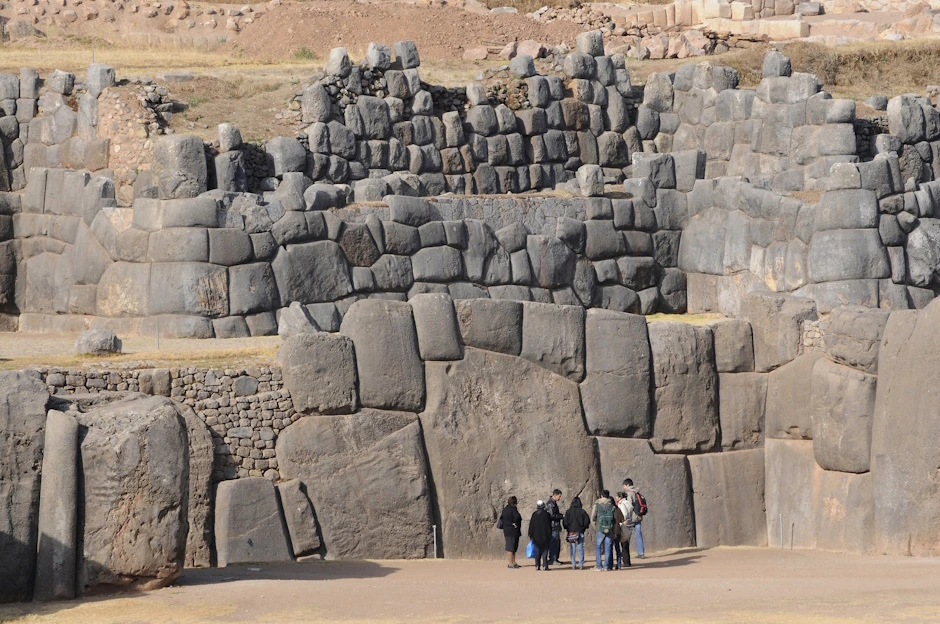
High above the city of Cusco, Peru, the massive stone walls of Sacsayhuamán rise like silent guardians of a lost empire. These astonishing structures are among the most impressive examples of megalithic architecture in the world and continue to amaze visitors and scholars alike with their scale, precision, and mysterious construction techniques.
The Art of Megalithic Construction
The most striking feature of Sacsayhuamán is its colossal stone walls, composed of immense limestone blocks—some weighing more than 100 tons. The stones were cut and shaped to fit together perfectly without the use of mortar, forming a series of zigzagging terraces that stretch across the hillside. Despite centuries of earthquakes and erosion, the walls remain largely intact—testament to the extraordinary craftsmanship of the Inca builders.
What makes these walls even more fascinating is the seamless precision with which the stones are joined. The Incas shaped each block to fit the others like a puzzle, often with multiple angles and complex joints. Even today, it is difficult to insert a sheet of paper between the stones, and no modern reconstruction has fully replicated their techniques.
Mysteries and Theories
How the Incas managed to quarry, transport, and position these massive stones—without iron tools, the wheel, or advanced machinery—remains one of archaeology’s great mysteries. Some theories suggest the use of ramps, ropes, and human labor, while others point to the Incas’ deep understanding of geometry, geology, and engineering.
The purpose behind the zigzag pattern of the walls is also a topic of debate. Some experts believe the layout served defensive purposes, while others argue it held symbolic significance, resembling the teeth of a puma—a sacred animal in Inca mythology and a symbol of strength and protection.
Earthquake-Proof Engineering
Another fascinating aspect of Sacsayhuamán’s stone walls is their earthquake resistance. The irregular shapes and tight joints allowed the structure to absorb seismic shocks, preventing collapse during even the strongest earthquakes. This resilience has allowed the walls to survive for over five centuries—outlasting many modern buildings in the region.
A Testament to Inca Genius
The massive stone walls of Sacsayhuamán stand not only as physical structures but as monuments to the ingenuity, determination, and spiritual vision of the Inca civilization. They remind us of an era when architecture was not only functional but sacred—deeply connected to nature, astronomy, and the Inca worldview.
Experience the Wonder with Leading Peru Travel
At Leading Peru Travel, we offer guided tours that bring the history, symbolism, and mystery of Sacsayhuamán to life. Walk alongside these mighty stones, hear the stories carved in silence, and witness firsthand the architectural genius of the Andes.
Terraced Walls of Sacsayhuamán: A Testament to Inca Precision and Power
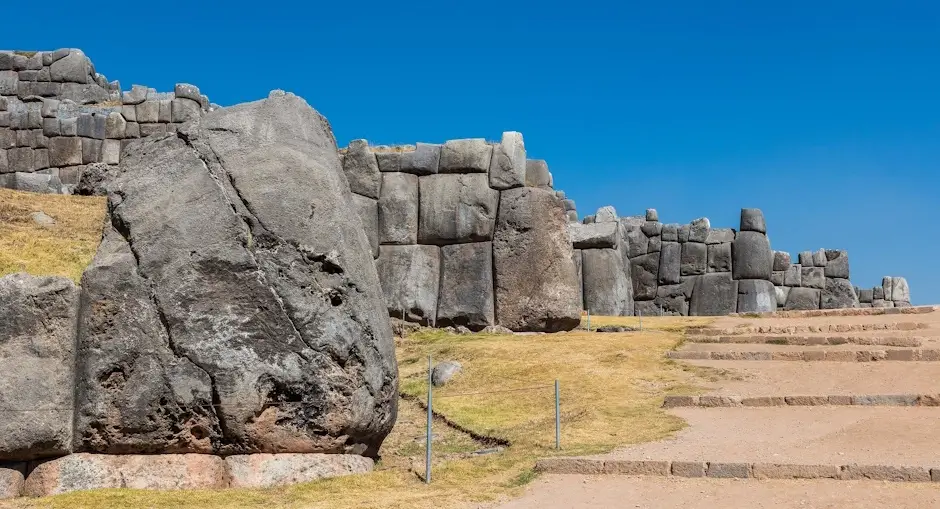
Rising above the ancient city of Cusco, the terraced walls of Sacsayhuamán represent one of the most extraordinary achievements of the Inca civilization. Built with gigantic stones and laid out in a distinctive zigzag pattern, these terraces are more than architectural feats—they are symbols of strength, sacred design, and the Inca’s mastery over both landscape and engineering.
The Iconic Zigzag Design
The terraced walls of Sacsayhuamán are arranged in three massive horizontal tiers, forming a serpentine shape across the hillside. From above, the pattern resembles a lightning bolt or the teeth of a jaguar or puma—sacred animals in the Andean worldview. The layout was likely intentional, reflecting the cosmic and symbolic beliefs of the Incas, who saw sacred geometry in the design of their cities and temples.
Each level of the terrace is built with enormous limestone blocks, some weighing up to 120 tons, precisely carved and fit together without mortar. Despite their size, these stones interlock so perfectly that even a razor blade cannot fit between them. This technique not only ensured structural stability but also enhanced the walls’ resistance to seismic activity—essential in earthquake-prone Cusco.
Engineering Meets Nature
The terraced walls were not simply decorative or defensive. They were part of a larger architectural and environmental system, designed to follow the natural contours of the land. The Incas had an exceptional ability to harmonize their structures with the landscape, using terraces to manage elevation, stabilize slopes, and control rainwater runoff. This integration of function and form gave their constructions durability and longevity.
Symbol of Imperial Power
The grandeur of Sacsayhuamán’s terraced walls was also a statement of the Inca Empire’s power and organization. Constructing such walls required thousands of laborers, careful planning, and centralized leadership. The terraces served not only as physical barriers but as visual representations of the empire’s strength, precision, and unity.
Preserving a Legacy
Despite partial destruction during the colonial period, when Spanish settlers removed stones to build churches and houses in Cusco, much of the terraced structure remains. Today, it stands as a UNESCO World Heritage Site and one of Peru’s most visited and admired historical landmarks.
Discover with Leading Peru Travel
At Leading Peru Travel, we invite you to explore the terraced walls of Sacsayhuamán with our expert guides. Learn the meaning behind each level, discover the techniques used by Inca stonemasons, and experience the awe of standing before one of the greatest architectural wonders of the ancient world.
- Discover the Wonders of Peru: with the Tour Perú Machu Picchu Nazca 15 Days
- Discover the Best of Perú: with the Tour Perú Amazon Nazca Machu Picchu 20 Days
- Travel Package to Peru Tour in Lima, Paracas, Ballestas, Nazca Lines, Colca Canyon 22 Days
Sacsayhuaman archaeological Center Ceremonial: Heart of Inca Spirituality
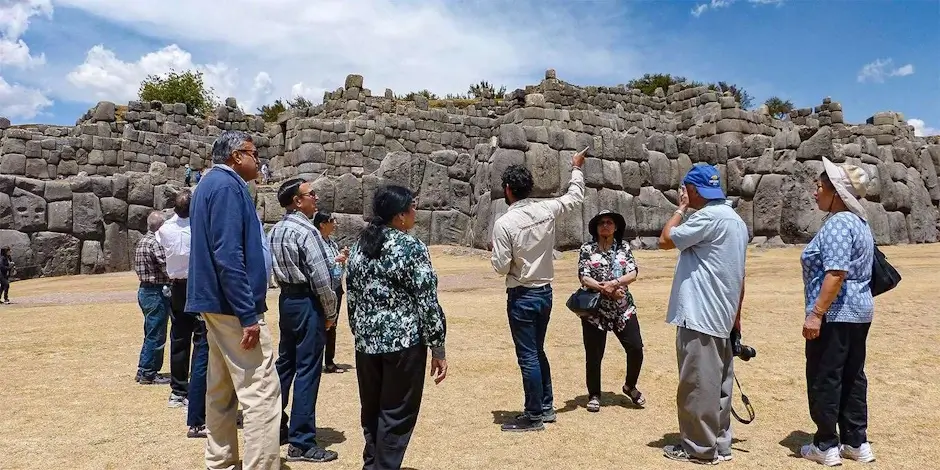
While often referred to as a fortress due to its massive walls and strategic location, Sacsayhuamán was much more than a military stronghold. For the Inca civilization, it was a sacred ceremonial center, deeply woven into the spiritual and cultural fabric of their empire. Located on a hill overlooking the city of Cusco—the historic capital of the Incas—Sacsayhuamán served as a powerful symbol of cosmic connection, religious practice, and imperial authority.
A Sacred Space in the Inca World
The Inca worldview was profoundly spiritual, based on a belief system that connected nature, astronomy, and the divine. Sacsayhuamán was designed as a place where ceremonial rituals could be performed in alignment with these beliefs. Its location and layout were chosen with great care, forming part of a sacred geography that included mountains, rivers, and the city of Cusco itself—considered the navel of the world.
The site was aligned with important celestial and seasonal events, and its design likely held deep astronomical and cosmological meaning. Some scholars believe the walls represent the lightning bolt of Illapa, the Inca god of thunder, while others suggest that the overall layout resembled the head of a puma, with Cusco forming the body.
Inti Raymi: The Festival of the Sun
One of the most important ceremonies held at Sacsayhuamán was the Inti Raymi, or Festival of the Sun. Celebrated during the winter solstice in June, this event honored Inti, the Inca sun god and principal deity. Thousands would gather to offer tributes, perform dances, chant prayers, and partake in sacred rituals. The emperor, regarded as the “Son of the Sun,” played a central role in the celebration, reaffirming his divine authority.
Today, Inti Raymi is reenacted each year at Sacsayhuamán, drawing thousands of spectators from around the world. The modern celebration reflects the grandeur of the past and keeps the Inca legacy alive through music, dance, and tradition.
Architecture with Spiritual Purpose
The architecture of Sacsayhuamán was not just functional—it was symbolic. Its open plazas, high platforms, and interconnected spaces likely served different ceremonial roles, including offerings to the gods, purification rituals, and imperial gatherings. The precision of its construction and the monumental scale of its stones reflect the sacred importance of the site and the Inca’s belief that stone was a living entity.
Many historians believe that towers once stood atop the walls, possibly used for astronomical observation or storage of ceremonial items. Though these structures were largely dismantled during the colonial period, the site’s spiritual essence remains palpable.
Experience the Sacred with Leading Peru Travel
At Leading Peru Travel, we offer immersive journeys that explore the ceremonial soul of Sacsayhuamán. Our guided tours reveal the spiritual meaning behind the stones, the rituals that once echoed through its plazas, and the cosmic wisdom that shaped every element of its design.
Inti Raymi Festival: Honoring the Sun God in the Heart of the Andes
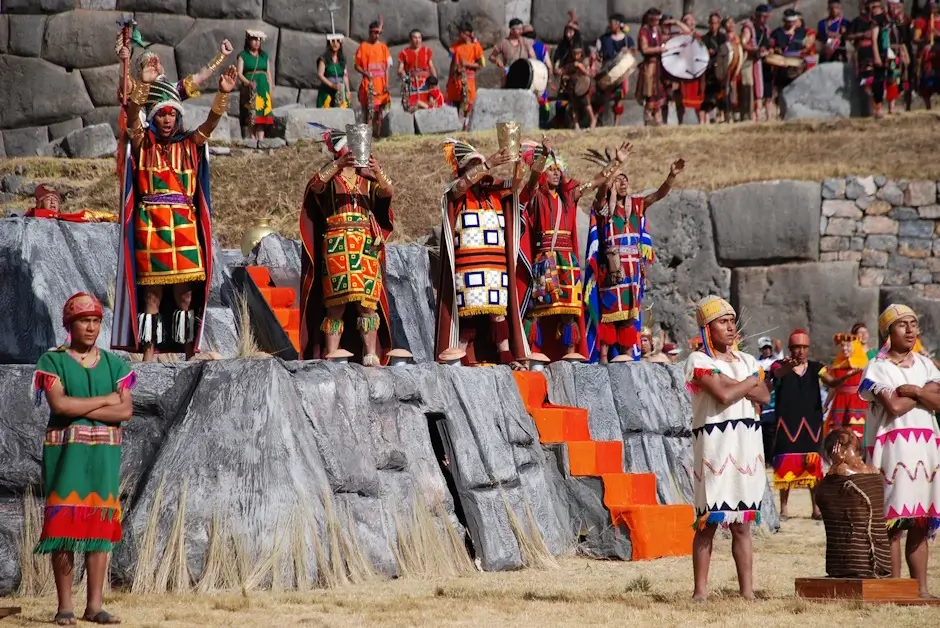
Every year on June 24th, the city of Cusco, Peru, transforms into a vibrant stage for one of South America’s most spectacular cultural celebrations: the Inti Raymi Festival, or Festival of the Sun. Rooted in ancient Inca tradition, this powerful reenactment of a sacred ceremony pays homage to Inti, the sun god and most revered deity in the Inca pantheon.
A Sacred Inca Tradition
The original Inti Raymi was celebrated during the winter solstice, marking the shortest day of the year and the return of longer days—essential for agriculture. For the Incas, this celestial event symbolized renewal, abundance, and divine connection, and it was one of the most important dates in the Inca calendar.
Initiated by Pachacutec, the great Inca emperor and builder of the empire, the festival took place in the main plaza of Cusco and at the ceremonial center of Sacsayhuamán. Thousands of nobles, priests, and community members would gather to participate in rituals that included music, dance, offerings, and prayers to ensure prosperity for the empire and a good harvest.
The Modern Revival
Although the original festival was banned during the Spanish colonial era, Inti Raymi was revived in the 20th century as a cultural reenactment. Today, it is one of Peru’s most iconic events, attracting travelers from around the world who come to witness the pageantry, precision, and passion of this ancient ritual brought to life.
The celebration begins at the Qorikancha Temple, once the most important temple of the Inca Empire, and continues through the streets of Cusco to Sacsayhuamán, where the main ceremony unfolds. The Inca emperor, dressed in gold and crimson, leads the event, accompanied by a royal entourage of nobles, warriors, and priestesses, performing offerings to the sun.
Cultural and Spiritual Significance
More than a performance, Inti Raymi is a living legacy of Inca spirituality and identity. It represents the enduring pride of the Andean people and their deep reverence for nature, the cosmos, and ancestral traditions. The festival blends theater, ceremony, and community in a spectacular display that reflects both ancient values and modern cultural pride.
The sound of traditional Andean instruments, the movements of carefully choreographed dances, and the vibrant colors of Inca-style attire all come together to create an unforgettable sensory experience that bridges past and present.
Join the Celebration with Leading Peru Travel
At Leading Peru Travel, we offer exclusive tours during Inti Raymi, providing front-row access to the festivities, expert guides to explain the symbolism of each ritual, and opportunities to explore Cusco’s rich historical and cultural background. Our curated experiences ensure you don’t just watch Inti Raymi—you feel it.
Sacsayhuamán’s Strategic Location: Power, Protection, and Sacred Design
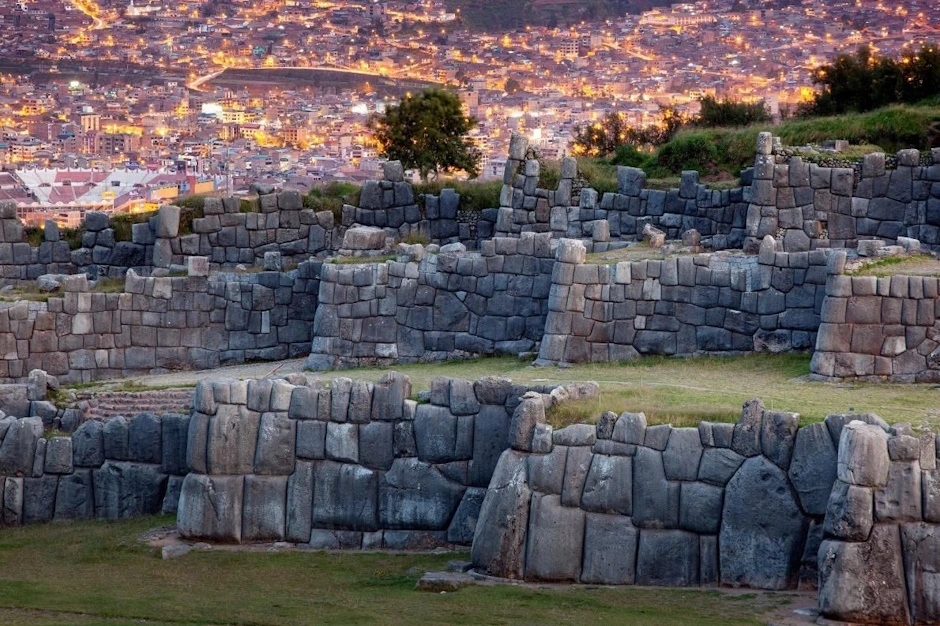
Located on a hilltop overlooking the historic city of Cusco, the strategic location of Sacsayhuamán was no coincidence. For the Incas, site selection was both practical and spiritual, combining defense, symbolism, and geography to create one of the most important and impressive structures of the Inca Empire.
Commanding Views Over Cusco
Sacsayhuamán sits approximately 3,700 meters (12,139 feet) above sea level, offering a commanding panoramic view of Cusco and the surrounding valleys. This elevated position allowed Inca rulers and priests to oversee the imperial capital, observe the movement of people, and monitor the skies—a crucial advantage in times of ceremony and conflict.
From this vantage point, Sacsayhuamán served as a watchtower, a defensive stronghold, and a sacred guardian of the city. Its location made it extremely difficult for potential invaders to approach unnoticed, while also allowing for rapid deployment of Inca warriors when needed.
Natural Defenses Enhanced by Inca Engineering
The Incas were masters at working with the natural terrain. The hill where Sacsayhuamán was built already offered steep slopes and rocky outcrops. The Inca architects enhanced these natural defenses by constructing massive stone walls in a zigzag pattern, which not only served as protection but also absorbed seismic energy during earthquakes.
This combination of natural barriers and human ingenuity turned the site into a nearly impenetrable fortress, strengthening Cusco’s overall defense system.
A Place of Power and Symbolism
The location of Sacsayhuamán was not just militarily strategic—it was also symbolically powerful. The Incas believed that Cusco was designed in the shape of a puma, a sacred animal representing strength and protection, with Sacsayhuamán forming the head of the puma. This sacred geography reflected the Inca worldview, in which the landscape was alive, spiritual, and interconnected with human life.
Being at the top of the puma’s head symbolized intellectual and spiritual authority, aligning the site with Inca cosmology and its deep reverence for the natural world.
Alignment with Sacred Sites
Sacsayhuamán is also part of a larger network of sacred sites and shrines, or huacas, that formed Cusco’s spiritual and ceremonial map. Its alignment with other temples and celestial events reflects the Incas’ advanced understanding of astronomy and sacred geography. The site’s position allowed for the observation of solstices, equinoxes, and key astronomical alignments important to the agricultural and religious calendar.
Visit with Leading Peru Travel
At Leading Peru Travel, we guide you through the fascinating terrain and stories behind Sacsayhuamán’s strategic location. Our tours combine historical insights with stunning views, helping you understand how the Incas built not only with stone, but with vision and purpose.
- Eplore Peru: From Vibrant Lima to Mystical Machu Picchu and Majestic Lake Titicaca 8 Days
- Perú Travel with Tour Lima Cusco Machu Picchu Lake Titicaca 7 Days
- Explore the Wonders of Cusco with City Tour and Machu Picchu 3 Days
- Explore Peru with the Lima Cusco Machu Picchu Huayna Picchu Tour 6 Days
For more information and to book your trip, contact us on WhatsApp. Follow us on Instagram for the latest updates and travel inspiration.
CONTACT US:
We are a Travel Agency specialized in tourist packages, if you need any information, do not hesitate to write to us.
We offer tours in Peru and Bolivia.