

Andean marriage: A Sacred Union in the Heart of the Andes
An Andean marriage is a sacred and ancestral ceremony rooted in the spiritual worldview of the Andean peoples of South America. More than a legal union, it is a profound commitment witnessed by nature, the community, and the cosmos. Deeply influenced by Inca traditions, the ceremony honors Pachamama (Mother Earth), the Apus (mountain spirits), and the balance of complementary energies known as yanantin.
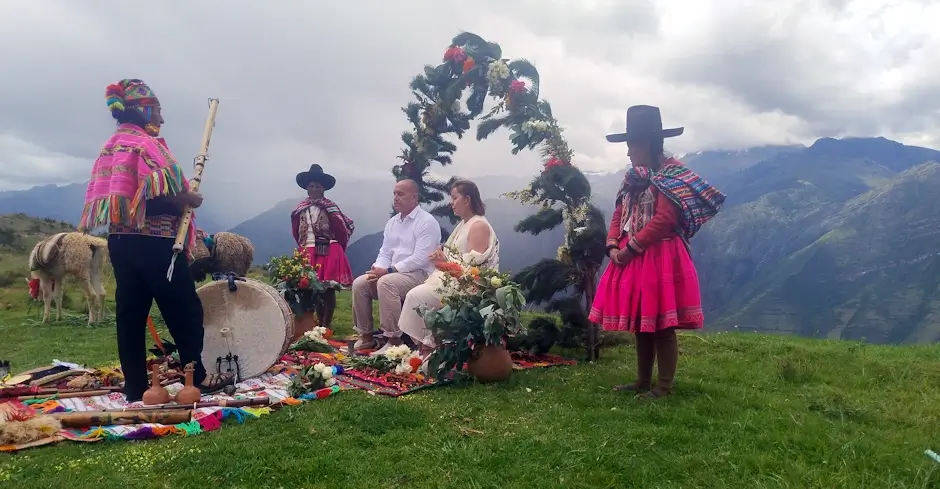
The ritual is often guided by an Andean spiritual leader, or paq’o, who performs offerings such as a despacho—a symbolic bundle prepared with flowers, seeds, sweets, and sacred elements—to express gratitude and ask for blessings. Traditional music, colorful Andean attire, and sacred coca leaves are part of the celebration, reinforcing the connection between the couple and their cultural heritage.
An Andean marriage represents harmony, reciprocity, and unity—not only between two people, but also between humanity and the natural world. It is a ceremony that celebrates love as a spiritual journey aligned with the energies of the universe.
Andean marriage: The Spiritual Meaning Behind the Ceremony
Andean marriage
An Andean marriage is not simply a symbolic ritual; it is a sacred act of spiritual alignment deeply rooted in the ancient worldview of the Andes. Practiced for centuries in regions such as Cusco and the Sacred Valley of the Incas, this ceremony reflects a profound understanding of harmony, reciprocity, and connection with nature.
Unlike Western marriages centered primarily on legal or religious institutions, an Andean wedding is guided by ancestral wisdom. It represents the union of two energies—masculine and feminine—within the greater balance of the cosmos.
A Union of Complementary Energies
At the heart of the Andean worldview lies the principle of Yanantin, the concept that opposite forces are not in conflict but are complementary and necessary for balance. In this understanding, marriage is the coming together of two distinct yet harmonious energies that create wholeness.
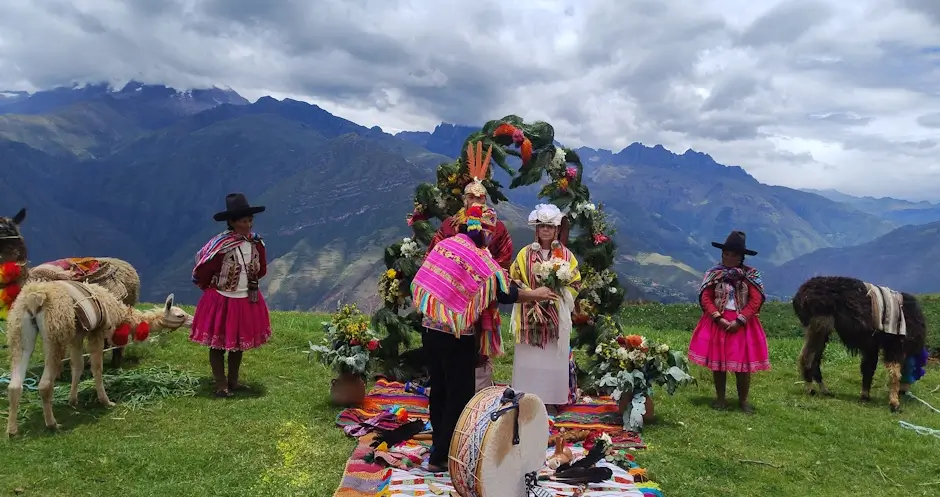
The ceremony is usually led by an Andean spiritual guide, known as a Paqo, who invokes blessings from:
- Pachamama (Mother Earth) – symbol of fertility, nourishment, and life
- The Apus – sacred mountain spirits that protect the land
- The four natural elements – earth, water, fire, and air
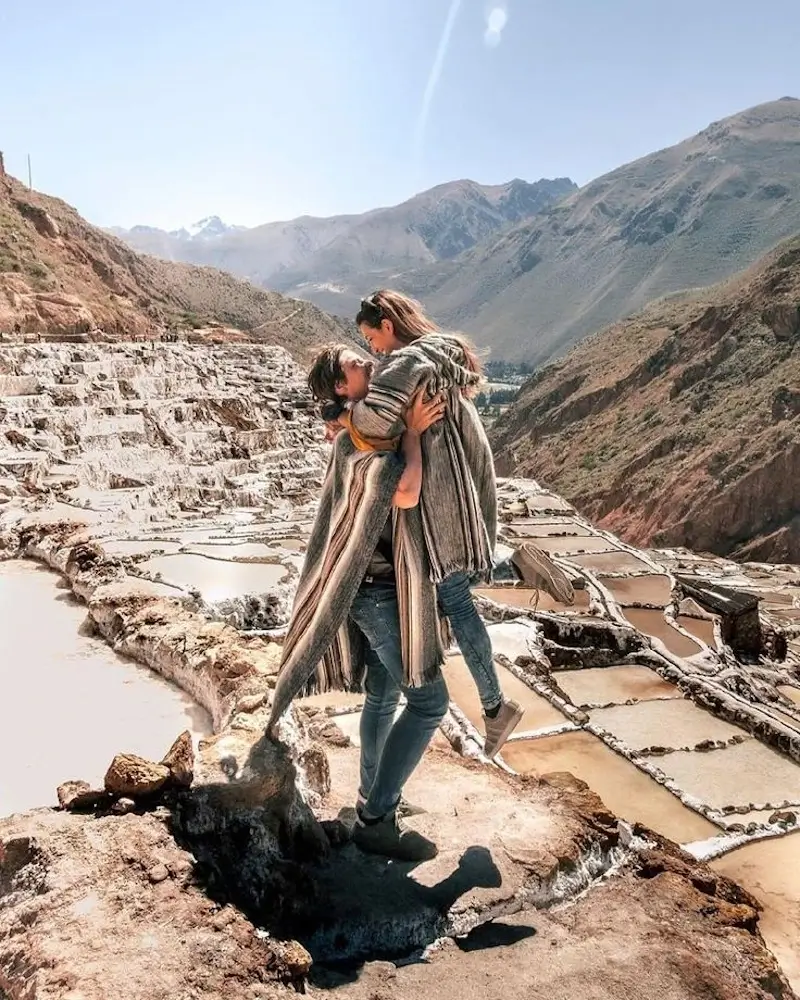
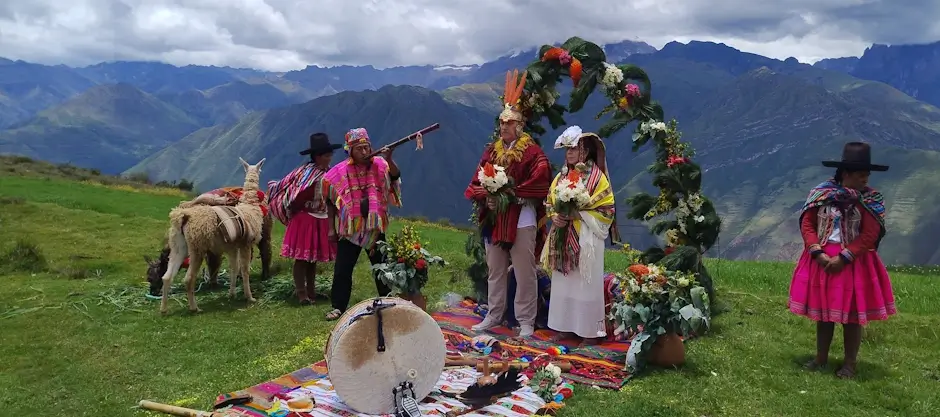
The couple stands before nature, often in open landscapes surrounded by mountains, as witnesses to their sacred commitment.
The Despacho Ceremony: Offering and Reciprocity
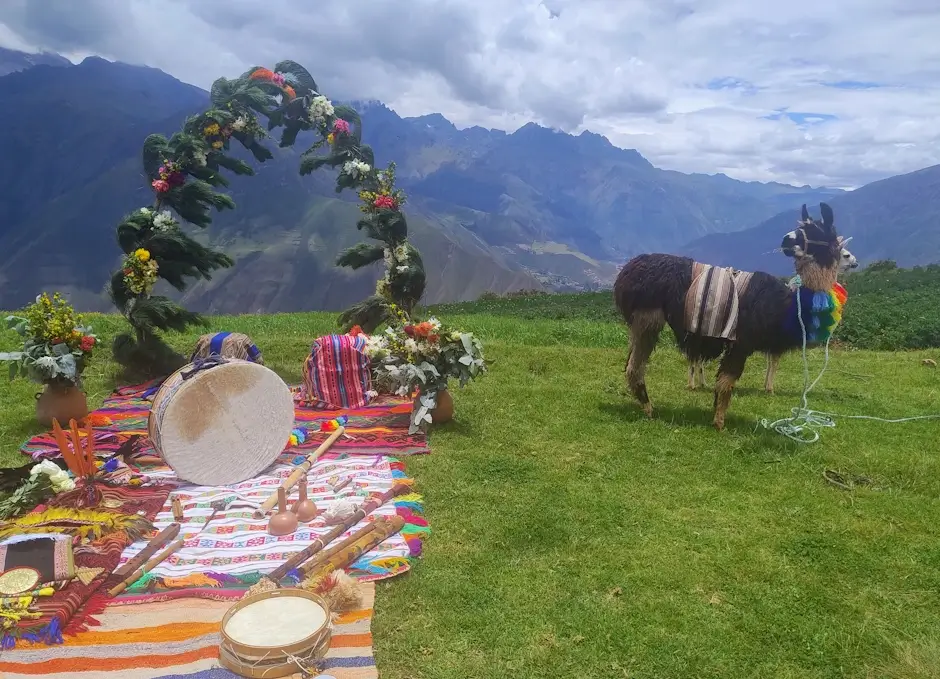
One of the most meaningful moments of the Andean marriage is the preparation of a Despacho, a ceremonial offering to Pachamama. This offering is carefully arranged with symbolic elements such as coca leaves, flowers, grains, seeds, sweets, and colored threads.
Each item carries intention—abundance, gratitude, protection, unity, and prosperity. As the couple places these elements into the offering, they express their prayers and commitments not only to one another but to the natural world.
The Despacho is later burned or buried, symbolizing Ayni, the sacred principle of reciprocity. In Andean belief, life is sustained through balance—what we receive must also be given back.
Marriage as a Cosmic Commitment
An Andean marriage is deeply connected to cosmic cycles. Some ceremonies are aligned with solstices or special agricultural dates, reflecting the Andean understanding that human life is intertwined with celestial rhythms.
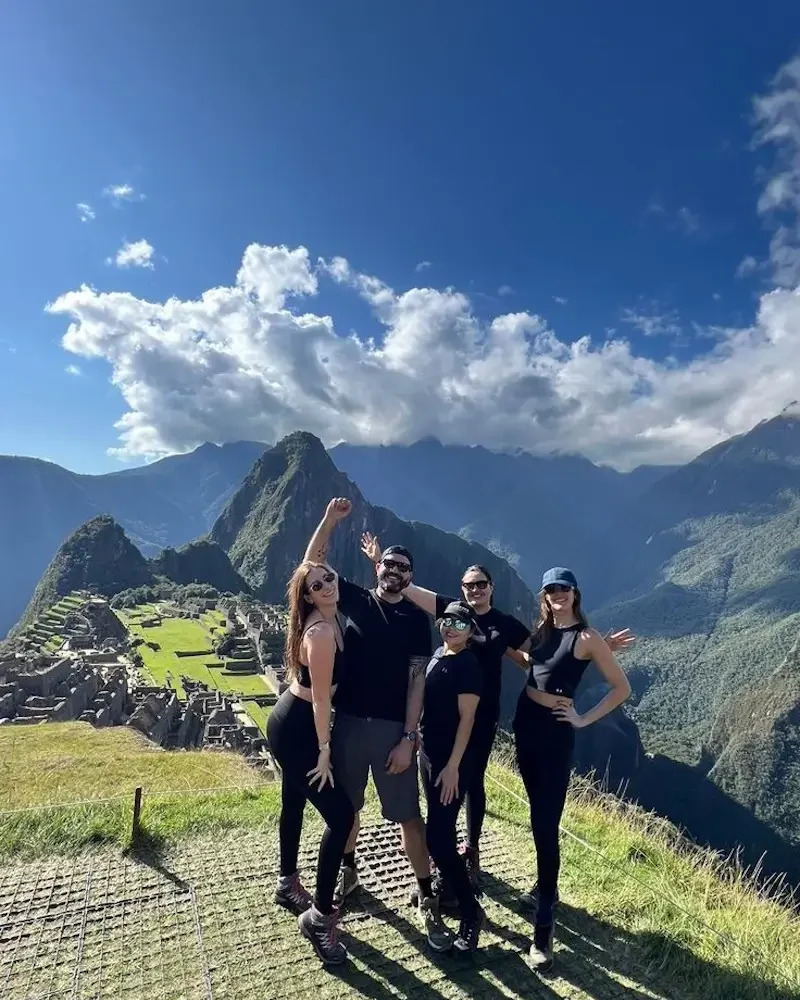
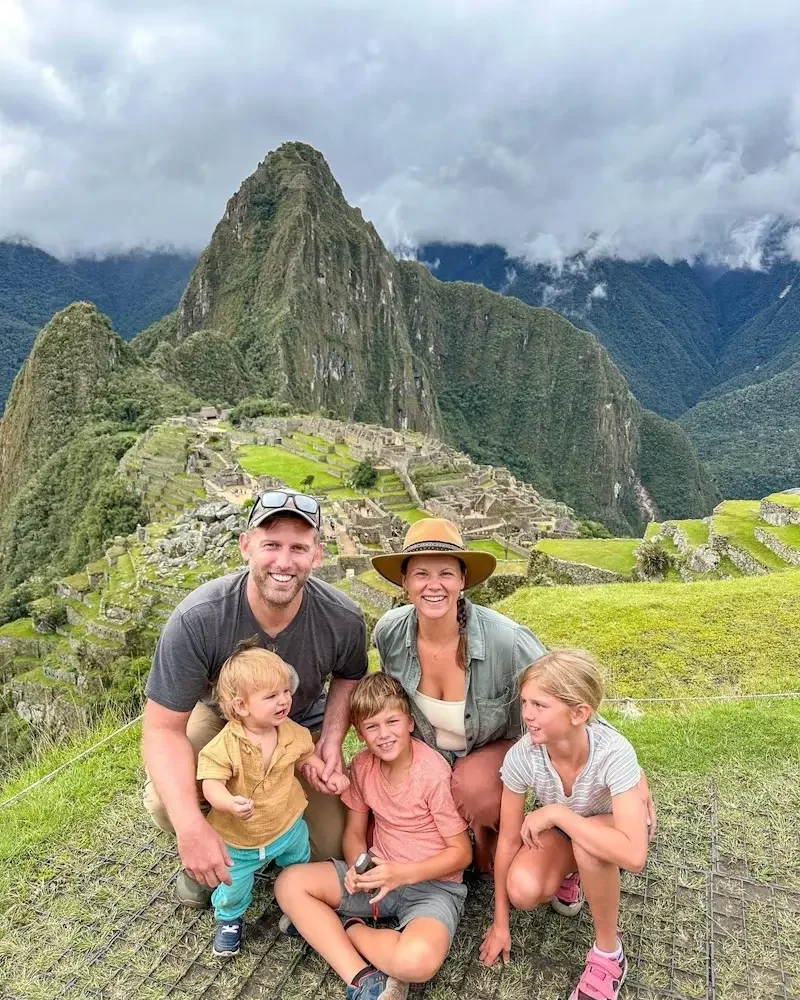
In sacred locations such as Machu Picchu, couples often feel a heightened sense of spiritual presence. The ceremony emphasizes intention, gratitude, and conscious partnership over material celebration.
Marriage, in this context, is not just a personal commitment—it is a spiritual agreement witnessed by nature, ancestors, and the universe.
A Transformative Beginning
For modern couples seeking depth and authenticity, an Andean wedding offers a powerful alternative. It invites reflection, mindfulness, and connection. It encourages couples to begin their journey with balance, respect, and spiritual awareness.
The Despacho: An Offering to Pachamama
Andean marriage
In an Andean marriage ceremony, one of the most sacred and meaningful rituals is the Despacho, a ceremonial offering made in honor of Pachamama (Mother Earth). Deeply rooted in Andean spirituality, this ritual symbolizes gratitude, reciprocity, and the harmonious beginning of a couple’s life together.
Celebrated in ancestral regions such as Cusco and the majestic Sacred Valley of the Incas, the Despacho ceremony connects the couple not only to each other, but also to nature, the mountains, and the spiritual forces that guide life in the Andes.
The Meaning of the Despacho
The word Despacho refers to a sacred bundle carefully prepared as an offering to Pachamama. In the Andean worldview, life is sustained by Ayni, the principle of sacred reciprocity—everything we receive from the Earth must be given back in gratitude.
Within the context of a wedding, the Despacho represents:
- The couple’s gratitude for life and love
- A prayer for abundance and fertility
- A request for protection from the Apus (sacred mountain spirits)
- A commitment to live in balance and harmony
Rather than focusing solely on the union between two individuals, the ritual expands the marriage to include the natural and spiritual world.
Sacred Elements and Symbolism
The Despacho is prepared on a white ceremonial paper or cloth. Guided by an Andean spiritual leader, known as a Paqo, the couple places symbolic items one by one with intention and prayer.
Common elements include:
- Coca leaves – communication with the spiritual world
- Flowers and petals – beauty and harmony
- Seeds and grains – prosperity and nourishment
- Sweets and candies – sweetness in the relationship
- Colored wool threads – unity and interconnectedness
Each layer of the offering carries meaning. The process itself is meditative and emotional, allowing the couple to reflect on their values and shared intentions.
The Ritual of Offering
Once completed, the Despacho is folded into a sacred bundle. Depending on tradition and location, it is either burned in a ceremonial fire or buried in the earth.
Burning the Despacho allows the prayers to rise with the smoke to the heavens, while burying it symbolizes returning energy directly to Pachamama. Both acts represent the sacred exchange between humans and nature.
In breathtaking landscapes near Machu Picchu or high in the Andes, the moment feels especially powerful, as mountains, wind, and sky become silent witnesses to the offering.
A Spiritual Foundation for Marriage
The Despacho ceremony transforms the wedding into more than a celebration—it becomes a conscious spiritual beginning. It teaches that love must be nurtured with gratitude, balance, and reciprocity, just like the relationship between humanity and the Earth.
For couples seeking a meaningful and culturally rich experience, the Despacho offers a profound reminder: marriage is not only a bond between two people, but a sacred commitment woven into the living energy of the Andes.
Andean marriage: The Despacho – An Offering to Pachamama
Andean marriage
Andean marriage: A Wedding Connected to the Cosmos
Andean marriage
An Andean marriage is not only a union between two people—it is a sacred alignment with the universe. Rooted in ancestral Andean cosmology, this ceremony recognizes that love exists within a vast, interconnected web of mountains, stars, earth, and spirit. In regions such as Cusco and the breathtaking Sacred Valley of the Incas, couples celebrate their union surrounded by landscapes that have been considered sacred for centuries.
To understand an Andean marriage is to understand a worldview in which humanity is not separate from nature, but an active participant in its rhythms.
The Andean View of the Universe
In Andean thought, the cosmos is alive. The universe is often understood through three interconnected realms:
- Hanan Pacha – the upper world of the sun, moon, and stars
- Kay Pacha – the present world of humans and nature
- Ukhu Pacha – the inner world of ancestors and spiritual forces
Marriage, within this framework, is more than a personal contract. It is a conscious step into harmony with these realms. The couple stands at the center of this cosmic structure, committing to balance and reciprocity.
This philosophy is not abstract poetry; it shaped real civilizations, including the culture that built Machu Picchu—a site carefully aligned with astronomical events such as solstices and equinoxes.
Aligning Love with Cosmic Cycles
Andean marriage are often scheduled according to meaningful dates in the agricultural or solar calendar. Solstices, particularly the June solstice celebrated as Inti Raymi in Cusco, hold deep spiritual significance because they mark the turning points of the sun’s journey.
This alignment reflects a powerful idea: just as the earth moves in cycles, relationships also evolve in cycles. Choosing an auspicious date is a way of synchronizing the couple’s new beginning with cosmic order.
The ceremony frequently takes place outdoors, where mountains (known as Apus) act as spiritual witnesses. The sky above, the earth below, and the wind moving through the valley become active participants in the union.
Nature as a Sacred Witness
In Western ceremonies, witnesses are usually friends and family. In an Andean wedding, nature itself is also a witness.
The mountains represent strength and protection.
The earth symbolizes fertility and stability.
The fire signifies transformation.
The air carries prayers to the spiritual realm.
The couple does not stand alone. They are held within a living landscape.
From a philosophical perspective, this reflects an ecological awareness that feels strikingly modern: human love is part of a larger system. The ceremony subtly teaches responsibility—not only toward each other, but toward the world that sustains them.
A Cosmic Commitment
An Andean marriage connected to the cosmos transforms marriage into a spiritual journey. It is not only about romance or celebration; it is about balance, gratitude, and awareness.
By aligning their vows with celestial cycles and sacred landscapes, couples symbolically anchor their love in something greater than themselves. The ritual reminds them that harmony must be cultivated—just as farmers cultivate the land in rhythm with the seasons.
In the Andes, love is not isolated from the universe. It is woven into it.
An Andean marriage, connected to the cosmos, invites couples to begin their shared life with humility, intention, and a deep respect for the natural and spiritual forces that surround them.
For more information and to book your trip, contact us on WhatsApp. Follow us on Instagram for the latest updates and travel inspiration.
CONTACT US:
We are a Travel Agency specialized in tourist packages, if you need any information, do not hesitate to write to us.
We offer tours in Peru and Bolivia.