

Nazca Lines Flights: The Complete Guide
A Nazca Lines flight is a scenic trip in a small aircraft over the Nazca Lines, the massive geoglyphs etched into Peru’s southern desert more than 1,500 years ago. Flying is the only way to see most figures in full, since their scale, some stretch over 300 meters, makes them unrecognizable from the ground. This guide covers what the flight involves, how much it costs, how to book it with a currently operating, licensed company, and the practical details that make the difference between a smooth visit and a frustrating one.
What Are the Nazca Lines?

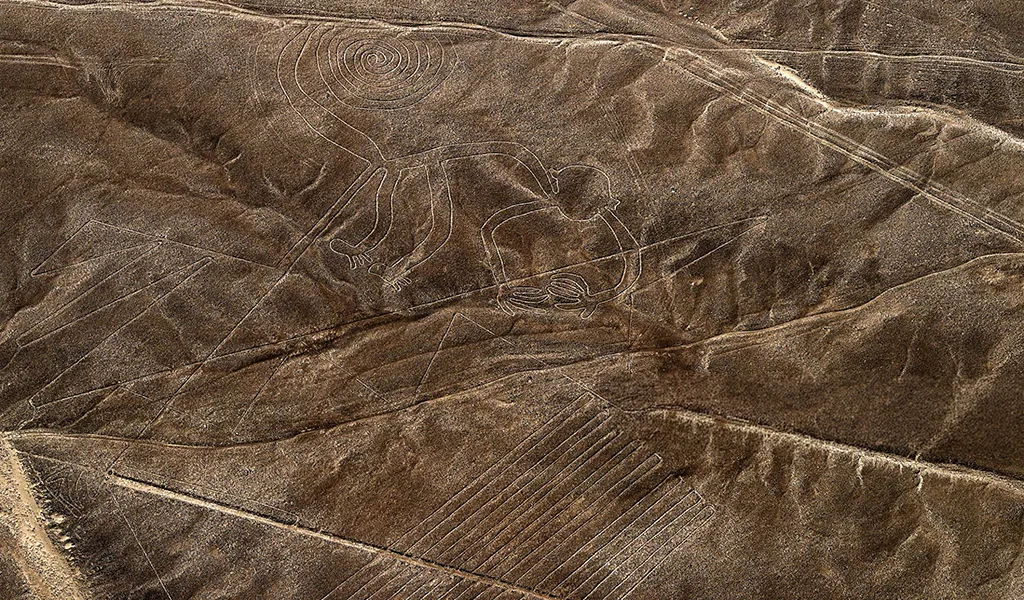
The Nazca Lines are geoglyphs created by the Nazca culture roughly between 500 BCE and 500 CE, made by removing the reddish, sun-oxidized stones that cover the desert surface to reveal the lighter sand beneath. The result is a network of straight lines running for kilometers, geometric shapes, and more than 70 figures, including the hummingbird, monkey, spider, condor, and the so-called astronaut. The desert’s dry, nearly windless climate is what has kept them legible for well over a thousand years. UNESCO designated the Nazca Lines a World Heritage Site in 1994.
Theories and Purpose
No single explanation for the lines has been widely accepted. Proposed purposes range from an astronomical calendar to ceremonial pathways to rituals connected to water and fertility in this arid region. For a fuller look at the leading theories behind the Nazca Lines, see our dedicated guide.
Location

The lines are spread across roughly 450 to 500 square kilometers of the Nazca Desert, part of Peru’s broader deserts in Peru, about 450 kilometers south of Lima. The nearest town, Nazca, sits within the tourist destinations in Ica region and serves as the main base for flights.
How to Get to Nazca
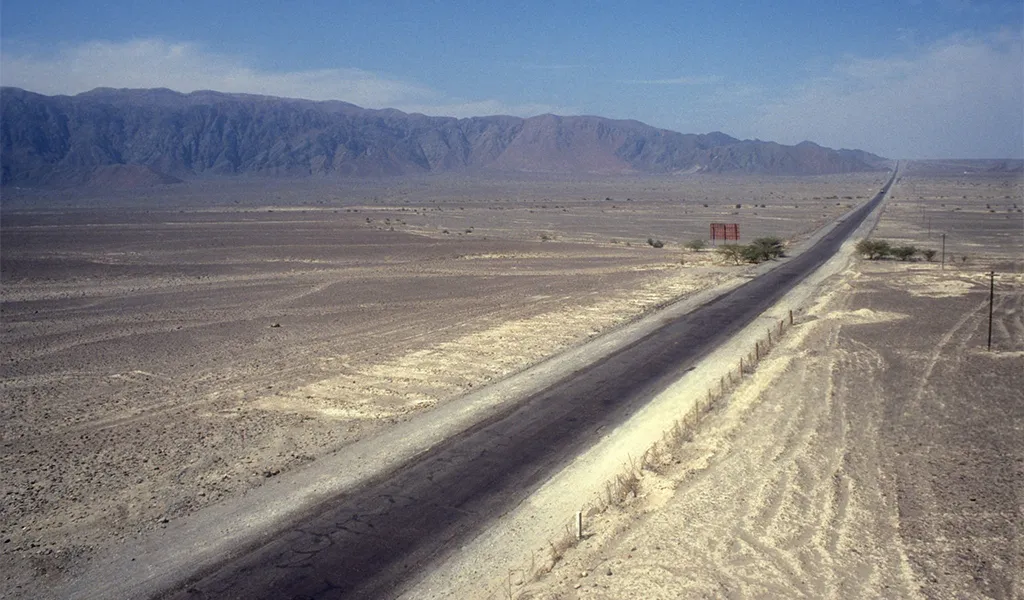
Most travelers reach Nazca from Lima by long-distance bus, a 7 to 8 hour trip along the Pan-American Highway on operators such as Cruz del Sur, Oltursa, or Civa. A private car or guided tour covers the same route with stops along the way, and some travelers fly into Pisco instead and continue south by road. If you’re spending a few days in the capital first, see our Lima travel guide for planning that part of the trip.
The Flight Experience

Flights typically last 30 to 45 minutes in the air, but plan for closer to 2 to 3 hours in total once check-in, a safety briefing, and waiting for your scheduled slot are factored in. Most aircraft seat 6 to 12 passengers in a layout that gives everyone a window, and the pilot banks the plane from side to side over each major figure so passengers on both sides get a view. The exact sequence of figures, how long each one stays in sight, and the precise maneuver can vary somewhat by aircraft, pilot, and the day’s conditions, so no two flights are identical down to the detail.
That repeated banking is what lets you see the figures clearly from the air, and it’s also the main reason some passengers feel queasy partway through; see Preparing for Your Flight below for ways to reduce that risk. On arrival at the airport, you’ll check in, go through a short safety briefing, and get an introduction to the figures before boarding.
Cost and Booking
Flights from Nazca typically run around $80 to $120 USD per person; flying from Pisco costs more once transfers are factored in, since the overall trip takes longer. Treat these as a general guide rather than a quote, since current pricing depends on the operator, aircraft, and season, so confirm the total before you pay. Before handing over any money, check:
- Whether airport tax, which is often charged separately and paid in cash at the airfield, is included in the quoted price.
- Whether ground transfers and any baggage allowance are included or charged separately.
- What happens if the flight is delayed or cancelled for weather, many operators rebook you for a later slot or the next available day rather than refunding automatically, but policies differ.
- Whether a minimum number of passengers is required for the flight to go ahead, and what happens if that minimum isn’t met.
- Whether the price quoted is per person or per flight, which matters mainly if you’re booking a private charter for a small group.
How you book changes some of this:
| Booking Channel | What It Typically Involves | Good to Know |
|---|---|---|
| Walk-in or local agency in Nazca | Book the flight once you’ve arrived, often same-day or next-day | Flexible and lets you check current openings in person, but availability is tighter in the May to September high season |
| Online in advance | Reserve a seat and sometimes a hotel pickup before you arrive | Secures your preferred time slot ahead of busy periods; confirm exactly what’s included before paying |
| Bundled package with transport | Flight combined with transport from Lima, Pisco, or Ica, sometimes with accommodation | Simplifies logistics for a short visit; compare the per-person flight cost against booking the flight separately |
Expect to be weighed before boarding, which is standard procedure for these small aircraft; most operators apply an additional charge or a seating adjustment above a certain weight, so ask in advance if this could affect you. If you’d rather have the flight built into a larger trip, see our Peru package with Nazca flight.
Choosing a Safe Operator
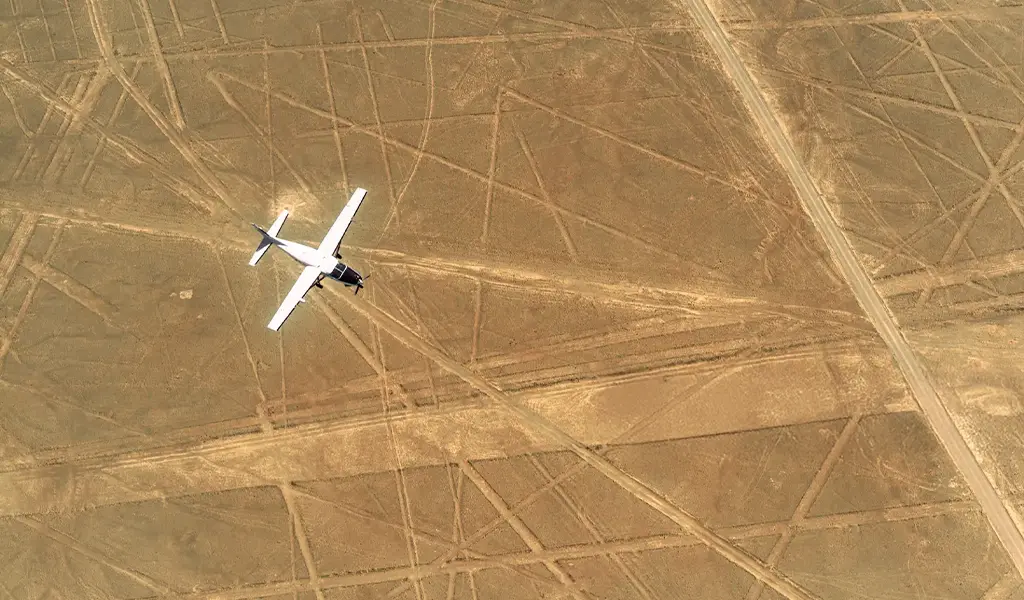
Nazca sightseeing flights are regulated by Peru’s aviation authority, and which companies are currently licensed to fly can change, sometimes with little notice, following safety reviews. In 2026, safety incidents led regulators to suspend at least one Nazca-area carrier’s operations, and separately, high winds prompted the temporary grounding of flights from both Nazca and Pisco airports at points during the year, a reminder that operator status in this market can shift faster than an older “best airline” list reflects.
A few checks matter more than any specific brand name:
- Confirm the operator is currently licensed and actively flying; don’t rely on a list or article that might predate a suspension.
- Ask whether a safety briefing is given before boarding and whether a co-pilot or second crew member is standard on their aircraft.
- Look at recent reviews rather than older ones, since a strong safety record a few years ago doesn’t guarantee current practices.
- Ask about the weather and cancellation policy up front rather than discovering it on the day of your flight.
- Book through a travel agency that vets current operator status for you if you’d rather not check it yourself.
Positive reviews reflect past passenger experience, not a guarantee of current safety standards or licensing, so it’s worth checking the two separately. Because operator status can shift, confirm who is currently flying at the time of booking rather than relying on a list from an older article.
Best Time to Fly
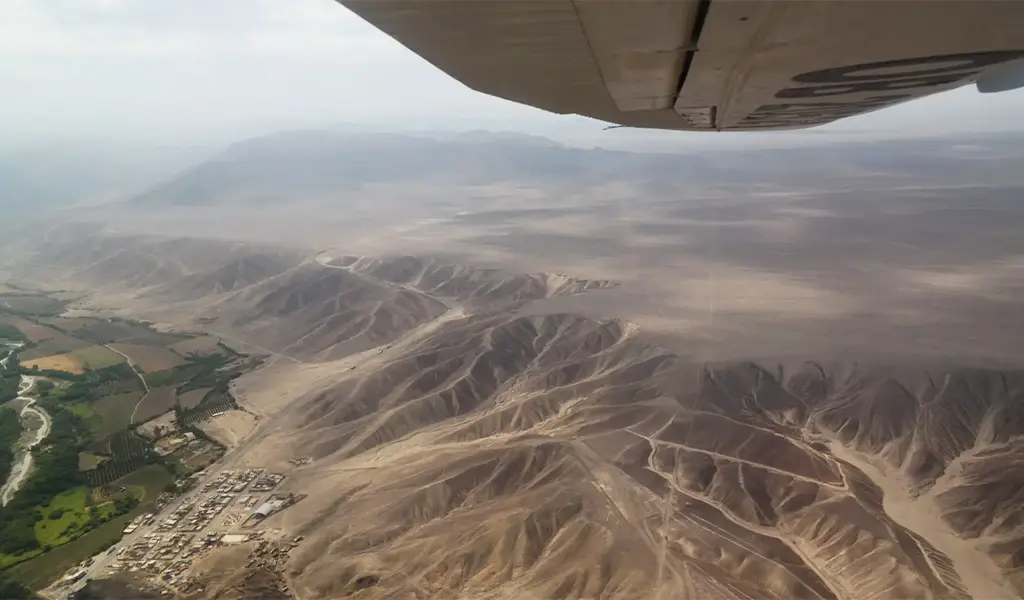
The dry season, roughly May through October, tends to bring clearer skies and a more predictable flight schedule than the rainy season, December through March, when cloud cover and delays are more common. Even so, conditions vary year to year and day to day: a clear dry-season morning isn’t guaranteed, and a rainy-season window can still produce a good flight.
Within a given day, mornings tend to have calmer winds, which is why most operators schedule flights earlier; desert winds in the afternoon can pick up and bring more turbulence or, in stronger cases, a temporary grounding of flights by the airport authority until conditions ease. Whether a specific flight goes ahead on a given day is ultimately an operational call made by the airport and the airline based on that morning’s conditions, not something a season or time slot can promise on its own. Booking an early slot and keeping a spare day in your itinerary is the most reliable way to protect against a weather-related delay. For how this fits into a wider trip, see Peru’s climate by season.
Preparing for Your Flight
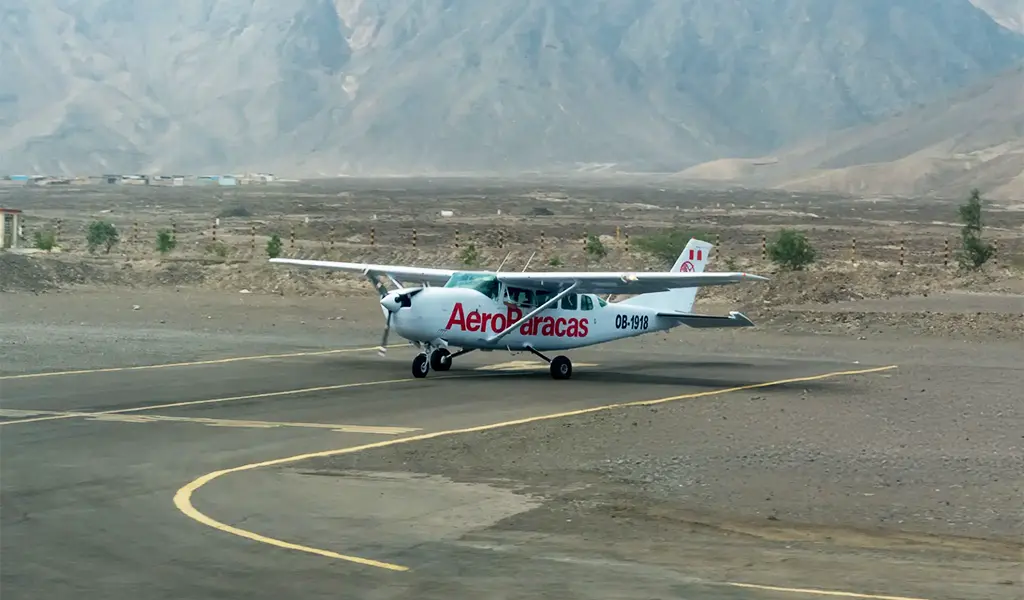
Eat lightly beforehand and skip a heavy meal right before boarding. The repeated banking maneuvers that give everyone a view of each figure are the main cause of motion sickness for sensitive passengers; an over-the-counter remedy taken ahead of time helps most people. If you have heart problems, blood pressure issues, or take medication that could be affected, check with your doctor before flying rather than finding out mid-flight that a maneuver doesn’t agree with you.
Confirm with your operator exactly what identification you need for check-in; most require a passport or government-issued photo ID, but requirements can vary, so don’t assume without checking. Bring a camera with a wrist strap, sunglasses, and a light jacket, since small planes aren’t climate controlled, and keep anything that could shift during the banking turns zipped away rather than loose in your lap.
If your flight is delayed or cancelled for weather, most operators will try to rebook you for later that day or the next available slot rather than refund outright, so ask about this when you book. Building a spare morning into your itinerary, as noted under Best Time to Fly, is the best protection against losing the flight entirely. For the rest of your packing list, see what to pack for Peru.
An Alternative to Flying: The Observation Tower
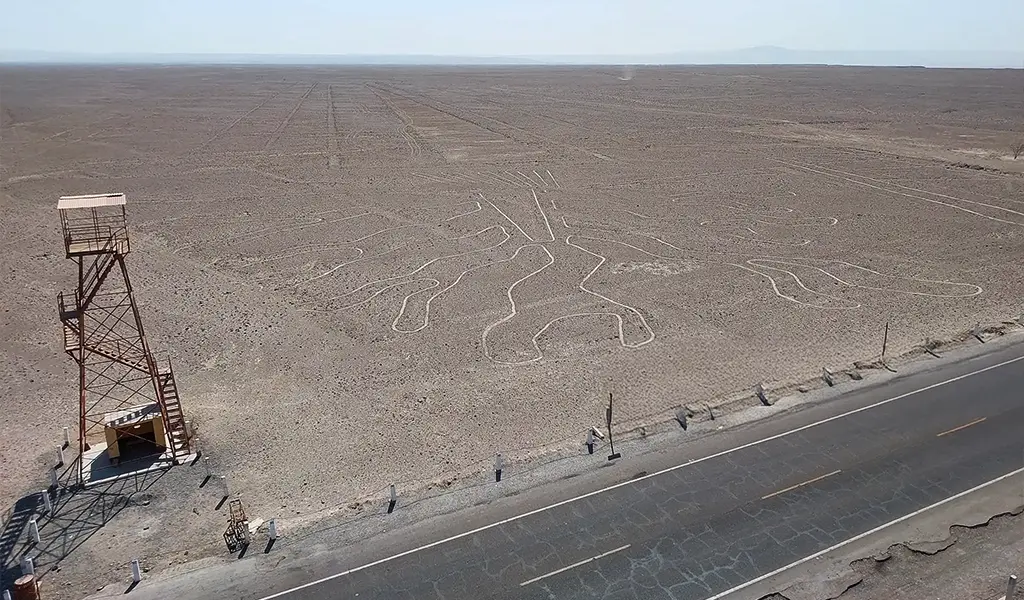
Travelers who can’t or don’t want to fly, whether for cost, time, or motion sickness reasons, have one ground-based option: a metal observation tower (mirador) beside the Pan-American Highway, about 20 kilometers north of Nazca. Climbing it lets you see three figures from above, the Hands, the Tree, and part of the Lizard, whose tail was cut off decades ago when the highway was built through it. Entry involves a modest fee paid on-site; check current access conditions with a local operator before planning a special trip just for it.
It’s a real but limited substitute for flying, not an equivalent experience: you see a handful of figures at an angle from the ground, not the dozens visible from the air with the fuller perspective a flight provides. It works best as a quick stop if you’re already driving the Pan-American Highway between Nazca and Ica or Paracas, less well as a planned day trip on its own.
Nearby Attractions
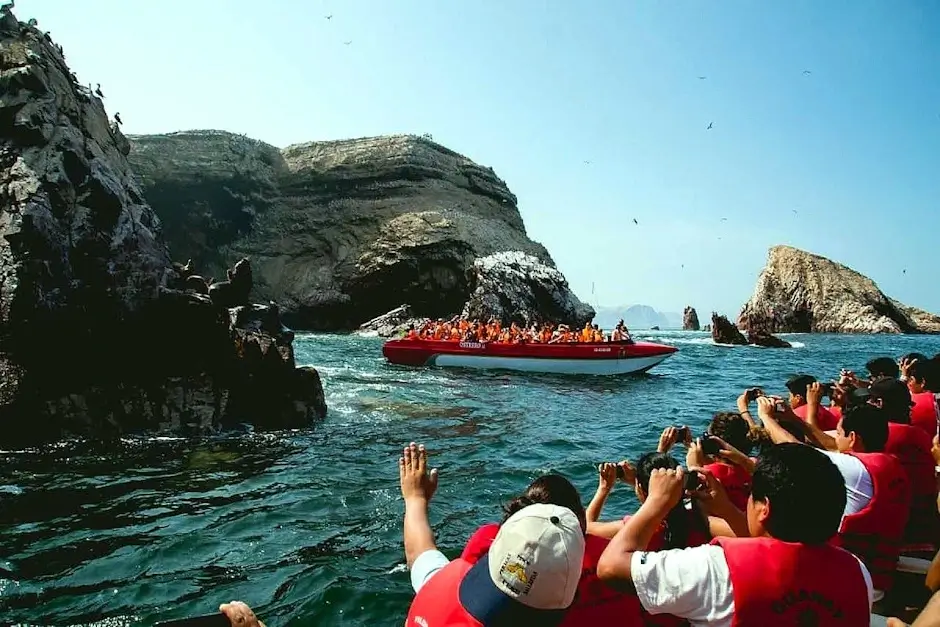
Many travelers combine the flight with stops along Peru’s southern coast: the Paracas and Ballestas Islands tours for wildlife and coastal scenery, or the Huacachina oasis for sandboarding and dune buggy rides. Closer to Nazca itself, the Cantalloc Aqueducts and the Chauchilla Cemetery are common half-day add-ons. Nazca also works well as a stop on the way to or from Arequipa, Cusco, or the Amazon; see our Peru travel guide for how to sequence it with the rest of your trip.
Respecting the Nazca Lines
The lines are fragile: a single footprint or tire track can scar the surface permanently, since the dark, oxidized stone removed to create them doesn’t regenerate on any practical timescale. Walking on or near the geoglyphs themselves isn’t permitted. Flying, or visiting the observation tower, with a licensed operator is part of protecting the site, not just a safety matter for you personally.
Frequently Asked Questions
How much does a Nazca Lines flight cost?
Expect roughly $80 to $120 USD per person from Nazca, more from Pisco once transfers are included. Confirm whether airport tax, transfers, and any other fees are part of the quoted price before you pay, since this varies by operator.
How long does a Nazca Lines flight take?
The flight itself typically lasts 30 to 45 minutes in the air, but plan for closer to 2 to 3 hours in total once check-in, the safety briefing, and waiting for your slot are included.
Where do Nazca Lines flights depart from?
Most depart from Maria Reiche Neuman Airport in Nazca. Flights from Pisco Airport are also available for travelers staying closer to Lima or Paracas, though they add driving and transfer time.
Is a Nazca Lines flight worth it?
For most travelers who’ve come this far specifically to see the geoglyphs, yes, flying is the only way to see the figures’ full scale and shape, since several stretch over 300 meters and are unrecognizable from the ground. If budget, time, or motion sickness are concerns, the observation tower is a shorter, cheaper, and more limited alternative.
Can you see the Nazca Lines without flying?
Yes, to a limited extent. The observation tower on the Pan-American Highway north of Nazca shows three figures, the Hands, the Tree, and part of the Lizard, from ground level, though most of the figures are only visible from the air.
Do Nazca Lines flights cause motion sickness?
They can. The banking maneuvers that give everyone a window view of each figure are the main trigger for sensitive passengers. Eating lightly beforehand and taking a motion sickness remedy in advance are the most common ways travelers reduce the risk.
What happens if a Nazca Lines flight is cancelled?
Flights are grounded or delayed for weather, especially high winds, more often than many travelers expect. Most operators rebook you for later the same day or the next available slot rather than refunding automatically, though policies vary, so ask before you book and build a spare morning into your itinerary if your schedule allows.
How far in advance should I book a Nazca Lines flight?
A few days to a couple of weeks ahead is usually enough outside peak months, but booking online in advance is worth doing during the May to September high season, when the preferred morning slots sell out faster.
Can I combine Nazca Lines flights with Machu Picchu?
Yes. Many itineraries pair the Nazca Lines with Machu Picchu tours along with Lima, Cusco, and the Sacred Valley.
Are Nazca Lines flights currently operating?
Flight schedules and individual operators can change at short notice due to weather or regulatory action following safety reviews. Confirm current operating status with your operator or travel agency close to your travel dates rather than assuming based on older information.
For more information or to book a Nazca Lines flight, contact us on WhatsApp.
CONTACT US:
We are a Travel Agency specialized in tourist packages, if you need any information, do not hesitate to write to us. We offer tours in Peru and Bolivia.