

Colca Canyon: A Complete Guide to Peru’s Canyon of Condors
Colca Canyon is a deep Andean canyon carved by the Colca River in the Arequipa region of southern Peru, about 160 kilometers (100 miles) from the city of Arequipa. It is one of the deepest canyons in the world, often cited at more than 3,000 meters (about 10,000 feet) deep in places, and one of the best places in South America to watch the Andean condor in flight.
Depth is only part of its appeal. The Colca Valley is lined with pre-Inca agricultural terraces that are still farmed today, traditional villages such as Chivay, Yanque and Cabanaconde, colonial churches and hot springs, all set against snow-capped volcanoes. This guide explains where Colca Canyon is, what makes it special, what to see and do, and how to plan your visit.

Where Is Colca Canyon?
Colca Canyon is in the province of Caylloma, in the Arequipa region of southern Peru. The canyon is the lower, deeper part of the Colca Valley, which follows the Colca River for more than 100 kilometers through the Andes.
- Gateway city: Arequipa, Peru’s second-largest city, is the usual starting point.
- Base town: Chivay, roughly midway along the valley, is the main town and service center.
- Trailhead town: Cabanaconde, farther down the valley, is the starting point for the main treks into the canyon.
How Deep Is Colca Canyon?
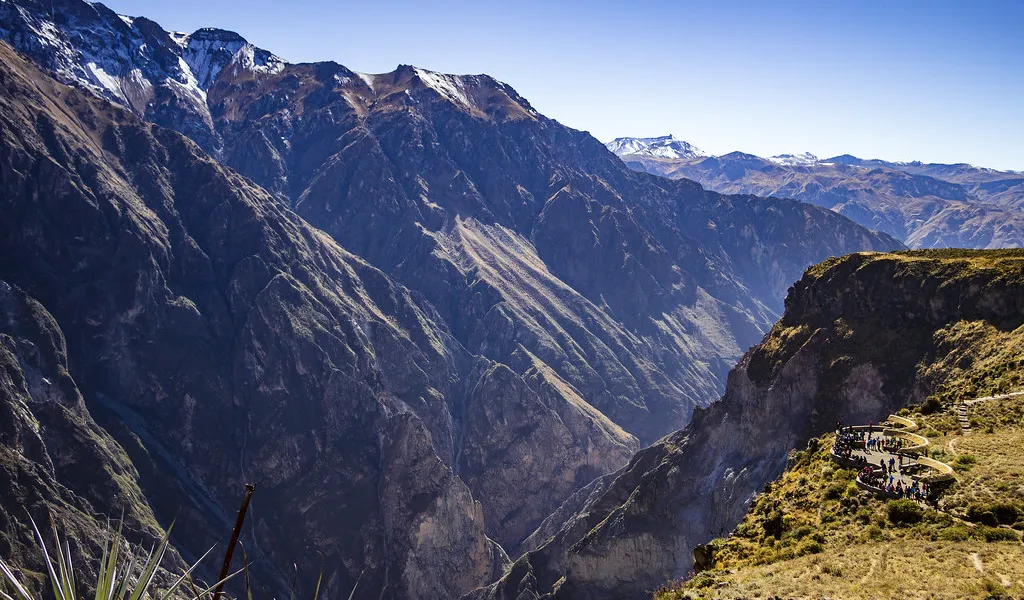
Colca Canyon is frequently described as about twice as deep as the Grand Canyon in the United States. Published figures vary, generally from just over 3,000 meters to around 3,400 meters, because the depth depends on where it is measured: from the surrounding peaks down to the river. The neighboring Cotahuasi Canyon, also in the Arequipa region, is often cited as slightly deeper, so Colca is best described as one of the deepest canyons in the world rather than the deepest.
A Landscape Shaped by the Colca River
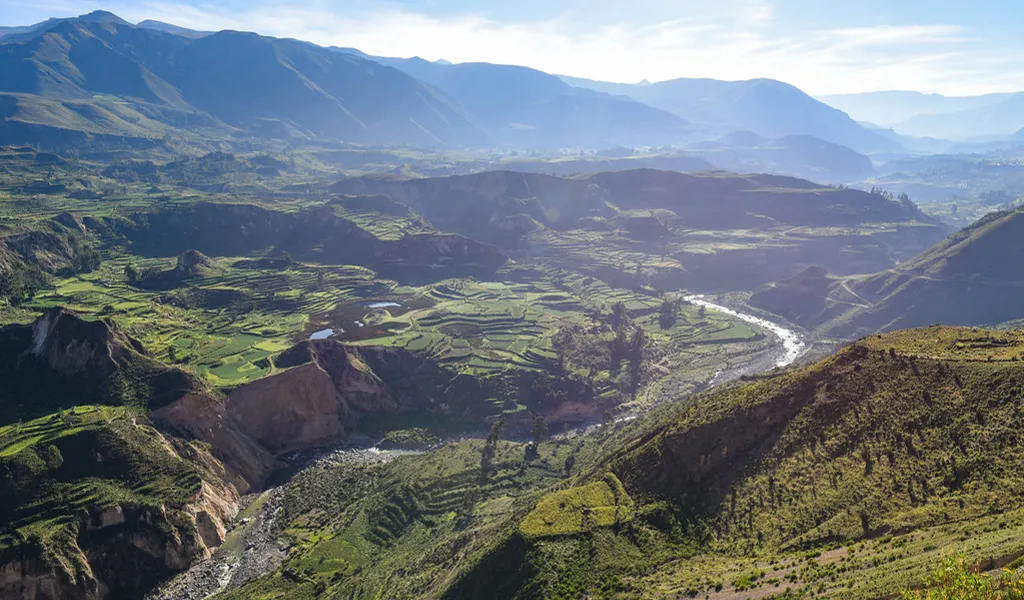
The Colca River has cut through the Andes over millions of years, creating sheer cliffs, winding valleys and slopes terraced by generations of farmers. The landscape changes along the way:
- Upper Colca: high Andean plateaus, puna grasslands, high-altitude lagoons and steep mountain terrain.
- Lower Colca: a gentler landscape of fertile valleys and agricultural terraces that descend toward the river, before the walls close in to form the canyon.
Wildlife
Besides the Andean condor, the Colca area is home to vicuñas, llamas and alpacas, especially on the high plains on the way from Arequipa, as well as Andean plants adapted to altitude and dry conditions.
Andean Condors at Cruz del Cóndor
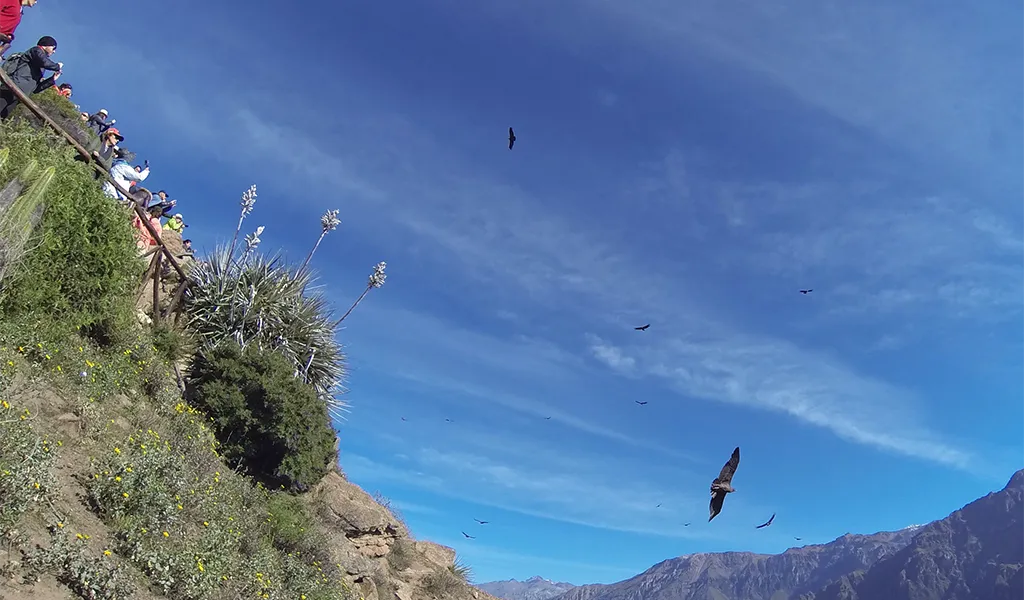
The Andean condor is the star of Colca Canyon. It is one of the largest flying birds in the world, with a wingspan of up to about 3 meters, and has long been a powerful symbol in Andean culture, associated with strength, freedom and the connection between earth and sky.
The best-known place to see it is Cruz del Cóndor (Condor’s Cross), a viewpoint on the edge of the canyon. As the morning sun warms the canyon walls, rising thermal currents lift the condors, which can glide past just meters from the viewpoint.
The Best Time to See Condors
Early morning is the best time to visit Cruz del Cóndor, when the thermals begin to form and the birds are most active. This is why most visits to the canyon include an early start or an overnight stay in the valley.
Watching Condors Responsibly
- Stay in the designated viewing areas and keep a respectful distance.
- Avoid noise and never try to attract or feed the birds.
- A local guide can explain the condor’s behavior and the importance of protecting it.
Other Colca Canyon Viewpoints
The road from Arequipa and the valley itself offer several other places to stop and take in the landscape:
- Patapampa Pass: the highest point on the road from Arequipa, at nearly 5,000 meters above sea level, with views of volcanoes such as Misti, Chachani and Ampato.
- Salinas and Aguada Blanca National Reserve: high plains crossed on the way to the valley, where vicuñas, llamas and alpacas graze.
- Achachihua viewpoint: a quieter stop with views over pre-Inca terraces and distant snow-capped peaks.
Colca Canyon Villages and Culture
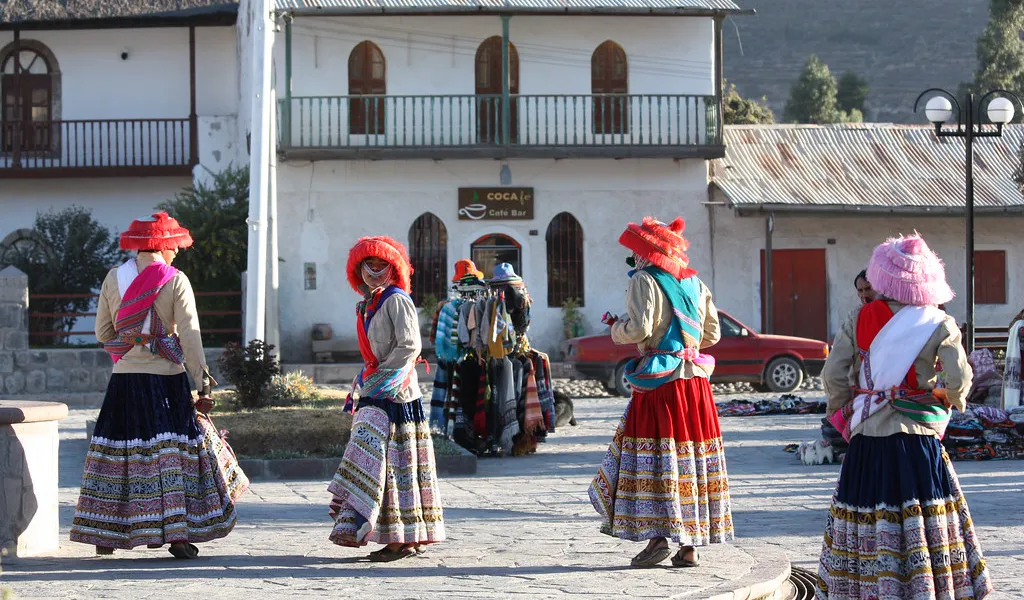
The Colca Valley has been inhabited for thousands of years. Its communities descend largely from the Collaguas and the Cabanas, the peoples who built many of the agricultural terraces on the valley slopes. Many of these pre-Inca terraces are still farmed today, which makes Colca a living cultural landscape rather than an archaeological site.
Chivay
Chivay is the main town of the valley and the gateway to the canyon. It has a lively local market, Andean food and a central square where music and dances are often performed. The La Calera hot springs are just a few minutes away.
Yanque
Yanque is known for its colonial church and its plaza, where traditional dances are often performed in the morning. It is also a good place to find local textiles and handicrafts.
Cabanaconde
Cabanaconde, near Cruz del Cóndor, is the starting point for the main treks into the canyon. Like other villages in the valley, it keeps traditions tied to terrace farming and celebrates festivals with music, dance and local food.
Colonial Legacy and Ancient Traces
Villages such as Maca, Achoma and Pinchollo, along the road between Chivay and Cruz del Cóndor, preserve colonial churches built after the Spanish arrival. Some caves in the area also hold ancient rock paintings, a reminder of the region’s long human history.
Local Cuisine
Andean cooking in Colca is based on local ingredients such as potatoes, quinoa and Andean herbs, often combined with Spanish influences. Quinoa soup is one of the dishes visitors are most likely to find.
Things to Do in Colca Canyon
Trekking

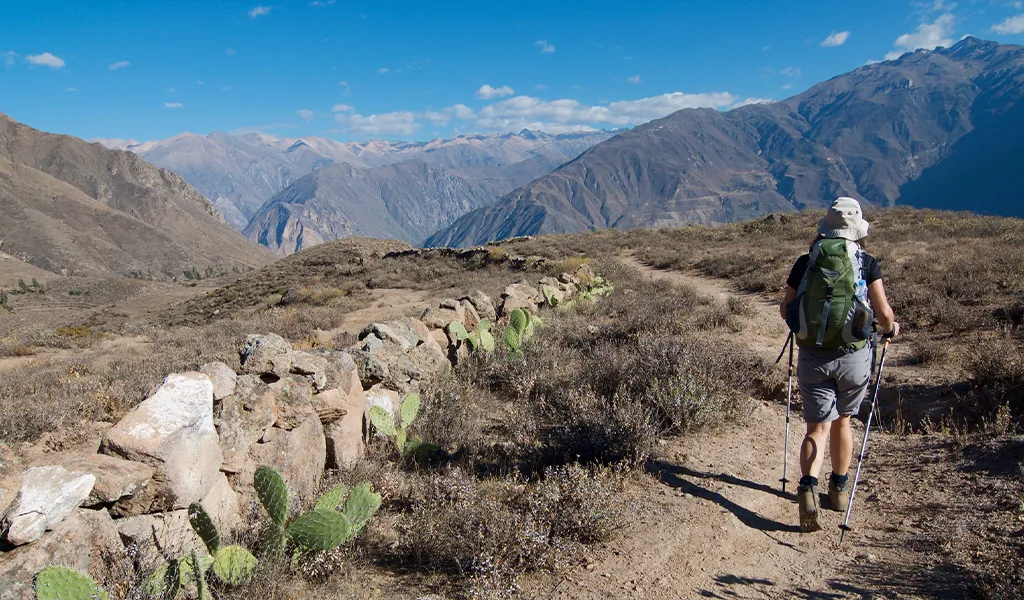
Trekking is the best way to experience the depth of the canyon. The most popular route descends from Cabanaconde to the Sangalle Oasis, a green spot with palm trees and natural pools on the canyon floor, while longer routes pass through remote villages such as Tapay. The descent is steep and the climb back is demanding, so treks are usually done over two or three days. For routes, difficulty and preparation, see our guides to Colca Canyon trekking routes and trekking in Colca Canyon.
Hot Springs
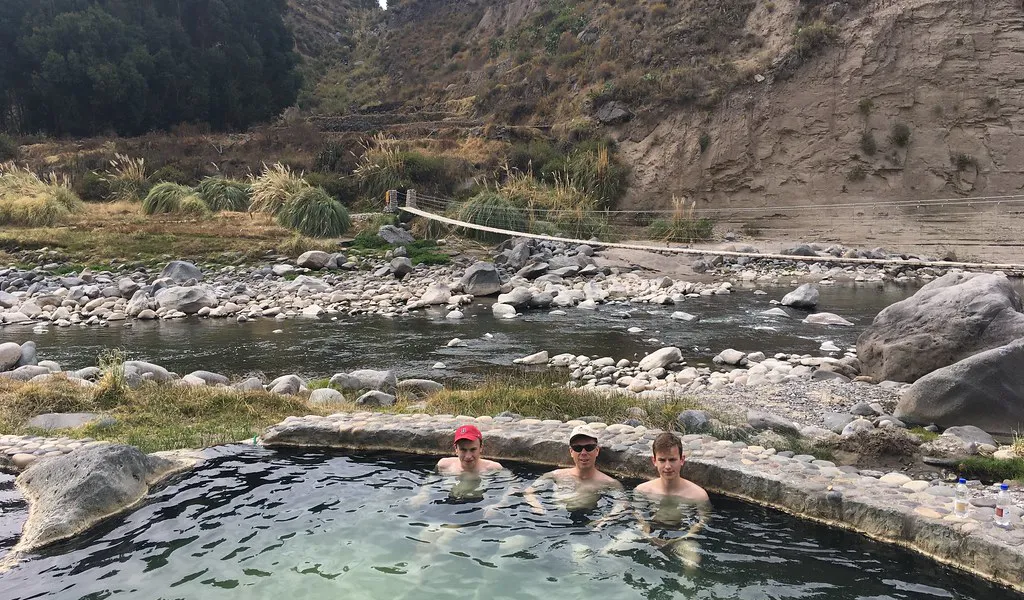
Volcanic activity heats several hot springs in the valley. The best known are the La Calera hot springs, a few minutes from Chivay, with outdoor pools, changing rooms and views of the surrounding mountains. There are also hot springs near Yanque. A soak in the afternoon is a good way to end a day of travel or hiking.
Rafting and Kayaking
Sections of the Colca River are used for rafting and kayaking with experienced guides, who provide equipment and safety instructions. Conditions depend on the season and the river level, so check with the operator before planning this activity.
Mountain Biking and Climbing
Trails around the canyon are used for mountain biking, and the cliffs offer options for guided rock climbing and rappelling.
Village Visits
Visiting markets, churches and plazas in towns such as Chivay, Yanque and Maca is one of the easiest ways to learn about life in the valley, without long hikes.
Best Time to Visit Colca Canyon

Colca Canyon can be visited year-round, but conditions change with the seasons:
| Season | Months | What to expect |
|---|---|---|
| Dry season | April to October | Sunny days, with daytime temperatures of about 15 to 25 °C and cold nights that can drop below 5 °C at higher altitudes. Best conditions for trekking, viewpoints and condor watching. |
| Rainy season | November to March | Greener landscapes and sporadic rain, usually brief. Showers can affect travel plans but rarely stop outdoor activities. |
Weather in the high Andes can change quickly, so check the forecast before you go. To compare seasons across the country, see our guide to the best time to visit Peru.
How to Visit Colca Canyon
From Arequipa
Most visits start in Arequipa, the White City. There are three main ways to reach the valley:
- Organized tour: the easiest option. Tours usually include transport, a guide and stops at viewpoints along the way.
- Public bus: the most economical option. Buses run regularly from Arequipa’s bus terminal to Chivay and take about 3 to 5 hours, without sightseeing stops. From Chivay, local buses and taxis connect with Yanque and Cabanaconde.
- Private transport or rental car: more flexibility for photo stops and detours. The road is paved but mountainous and climbs above 4,000 meters, so drive with care and watch the weather.
A tourist ticket is required to visit the main attractions of the valley, including Cruz del Cóndor. Organized tours usually include it; if you travel independently, buy it on arrival (POR VERIFICAR: current price and points of sale).
From Puno
Colca Canyon also fits on a route through southern Peru. Buses and tours connect the valley with Puno, on the shores of Lake Titicaca, crossing high Andean landscapes on the way.
Visiting with an Organized Tour
Because condors are most active early in the morning, many travelers spend a night in the valley. If you prefer an organized experience, our two-day tour to Colca Canyon and Cruz del Cóndor from Arequipa includes an overnight stay in the valley, an afternoon at the La Calera hot springs and an early-morning visit to Cruz del Cóndor, with stops in villages such as Maca and Yanque on the way back.
Tips for Visiting Colca Canyon
- Acclimatize first: the road and the valley are at high altitude. Spend at least a day or two in Arequipa before the trip and read our tips on how to prevent altitude sickness in Peru.
- Stay hydrated: dry air and altitude dehydrate you quickly. Carry water and eat light meals.
- Protect yourself from the sun: use high-SPF sunscreen, a hat and sunglasses.
- Dress in layers: days can be warm and nights very cold. Wear comfortable, sturdy shoes.
- Start early: it gives you time to reach Chivay or Cabanaconde and explore, and early mornings are best for condors.
- Book ahead in high season: reserve tours, guided activities and lodging in advance, especially from April to October.
- Respect the local culture and nature: don’t litter, follow signs in protected areas and ask before photographing people.
Frequently Asked Questions About Colca Canyon
Where is Colca Canyon located?
Colca Canyon is in the Arequipa region of southern Peru, about 160 kilometers (100 miles) from the city of Arequipa. Chivay is the main town of the Colca Valley.
Is Colca Canyon deeper than the Grand Canyon?
Yes. Colca Canyon is often described as about twice as deep as the Grand Canyon. Published depth figures vary from just over 3,000 meters to around 3,400 meters, depending on where the depth is measured.
Is Colca Canyon the deepest canyon in the world?
It is one of the deepest. The nearby Cotahuasi Canyon, also in Arequipa, is often cited as slightly deeper.
When is the best time to see condors in Colca Canyon?
Early in the morning, when rising thermal currents lift the birds above the canyon. Cruz del Cóndor is the best-known viewpoint, and the dry season (April to October) usually offers the clearest skies.
How many days do you need for Colca Canyon?
Many travelers visit on a two-day trip from Arequipa, spending a night in the valley so they can reach Cruz del Cóndor early in the morning. Treks into the canyon usually take two or three days.
Is altitude a problem in Colca Canyon?
It can be. The road from Arequipa climbs above 4,000 meters and reaches nearly 5,000 meters at Patapampa Pass. Acclimatizing in Arequipa first and drinking plenty of water help reduce the effects.
Planning a trip to Arequipa and Colca Canyon? Contact us on WhatsApp and our team will help you organize it.
CONTACT US:
We are a Travel Agency specialized in tourist packages, if you need any information, do not hesitate to write to us.