

Inti Raymi: Cusco’s Festival of the Sun, History and Meaning
Inti Raymi, the Festival of the Sun, was the most important religious ceremony of the Inca Empire, held at the winter solstice to honor Inti, the Sun god. Today it is reenacted every year on June 24 in Cusco, in a ceremony of around six hours that moves from the Qorikancha (Temple of the Sun) to the Plaza de Armas and ends at the Inca site of Sacsayhuamán.
The modern Inti Raymi has been staged since 1944, based on colonial chronicles, and in 2001 it was declared part of Peru’s National Cultural Heritage. More than a show, it is a celebration of Andean identity and the central event of Cusco’s festivities in June. This guide explains what Inti Raymi means, where it comes from, how the ceremony unfolds today and what to know if you plan to attend.
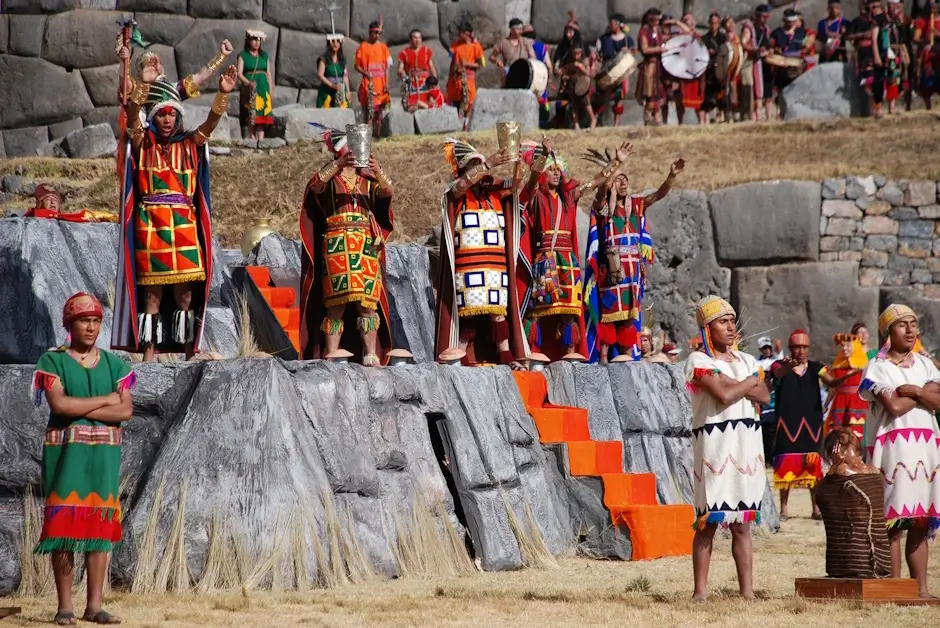
What Does Inti Raymi Mean?
In Quechua, the language of the Incas, Inti means “Sun” and Raymi means “festival” or “celebration”. Inti Raymi therefore translates as Festival of the Sun, a name that reflects the place the Sun held in Inca religion as the source of life, light and agricultural abundance.
The festival marked the winter solstice in the Southern Hemisphere, the shortest day of the year. For the Incas, it was the moment to give thanks for the harvest just gathered and to ask the Sun to return and guarantee the new agricultural cycle.
The Sun in the Inca Worldview
For the Incas, the Sun was much more than a celestial body. Inti was their principal deity: it nourished the crops, ruled the rhythm of the seasons and gave legitimacy to political power, because the Inca ruler was considered the son of the Sun. Honoring Inti was a way to keep the balance between people, nature and the cosmos.
That relationship extended to other sacred forces of the Andean world, such as Pachamama (Mother Earth) and the Apus, the spirits of the mountains. These beliefs still shape many rural Andean traditions today, and they explain why offerings to the Sun and to Pachamama remain central to the modern Inti Raymi.
History of Inti Raymi
Origins in the Inca Empire
Inti Raymi is attributed to Pachacutec, the 15th-century ruler who turned Cusco into the capital of Tahuantinsuyo, as the Incas called their empire. According to the chronicler Inca Garcilaso de la Vega, it was celebrated at the winter solstice, around June 21, to worship the Sun and ask for good harvests.
The celebration lasted several days (it is often cited as nine) and was the largest of the Inca calendar. The Inca, the nobility and the priests, dressed in fine textiles and gold, made offerings of llamas, food and chicha (fermented corn drink) to the Sun. Dances, music and shared meals reinforced the unity of the empire, and the ceremony also served to display the power and organization of the state.
Ban During the Colonial Period
After the Spanish conquest, the Catholic Church considered Inti Raymi a pagan ritual, and in 1572 Viceroy Francisco de Toledo prohibited it. The great public ceremonies in Cusco came to an end, but the memory of the festival did not disappear. In Andean communities, the gratitude to the Sun and the rituals tied to the agricultural calendar survived in daily life, and some elements are believed to have blended with the Catholic feast of Saint John the Baptist, celebrated on June 24.
The 1944 Revival
The modern Inti Raymi was born in 1944, when the Cusco intellectuals Humberto Vidal Unda and Faustino Espinoza Navarro reconstructed the ceremony based mainly on the Royal Commentaries of the Incas by Inca Garcilaso de la Vega. The first reenactment took place on June 24, 1944, at Sacsayhuamán, with Espinoza Navarro playing the Inca Pachacutec. Since then, June 24 has also been celebrated as the Day of Cusco.
Ironically, the same colonial period that banned the festival also produced the written records that made its revival possible centuries later.
National Cultural Heritage
In 2001, Law 27431 declared Inti Raymi part of Peru’s National Cultural Heritage and recognized it as the “Official Act and Principal Ritual Ceremony of National Identity”. Today it is organized by the Provincial Municipality of Cusco through Emufec, the municipal company in charge of Cusco’s festivities.
Why Is Inti Raymi Important?
Inti Raymi matters on several levels. Historically, it was the most important ceremony of the Inca state, a moment that renewed the bond between the ruler, the people and the Sun. Culturally, its revival in 1944 turned it into a symbol of Andean identity and continuity, which is why Peru recognized it by law as National Cultural Heritage and as the principal ritual ceremony of national identity. For Cusco, it is also the central day of the city’s June celebrations, a source of pride for the residents who take part in it and one of the events that draws the most visitors to the region each year.
Inti Raymi Activities: How the Festival Is Celebrated Today
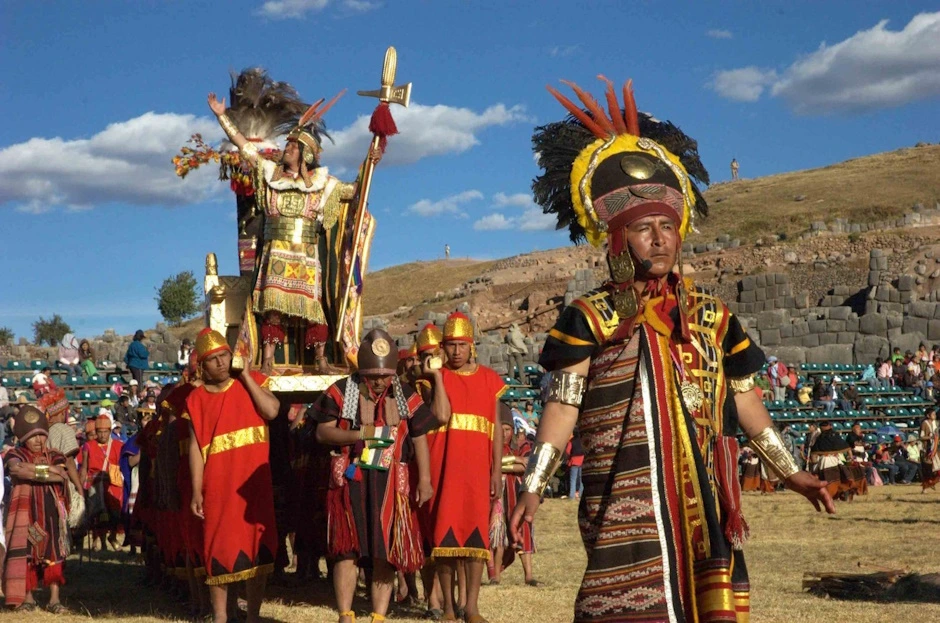
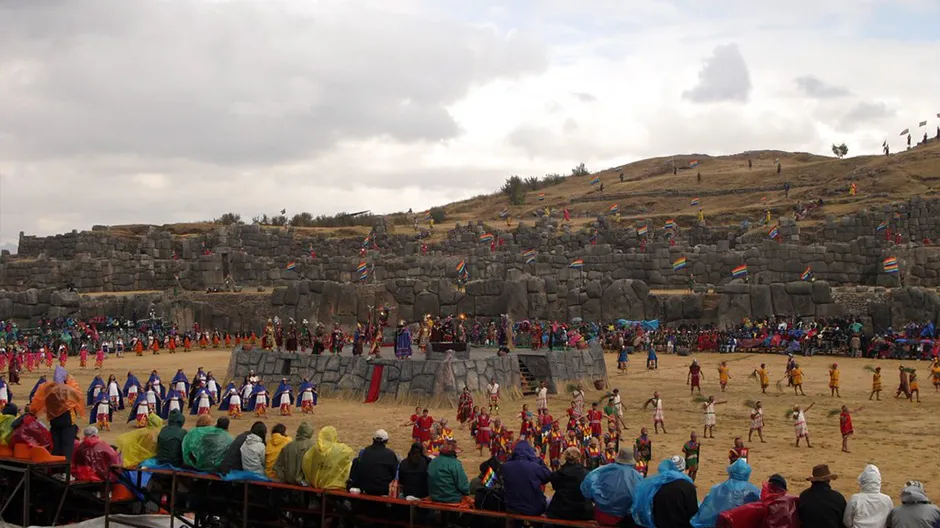
The modern Inti Raymi is not a religious ceremony in the original sense but a carefully staged reenactment that follows the script created in 1944. It is performed mainly in Quechua by hundreds of performers, many of them residents of Cusco who rehearse for weeks, and unfolds in three acts across three historic settings.
Qorikancha: Greeting to the Sun
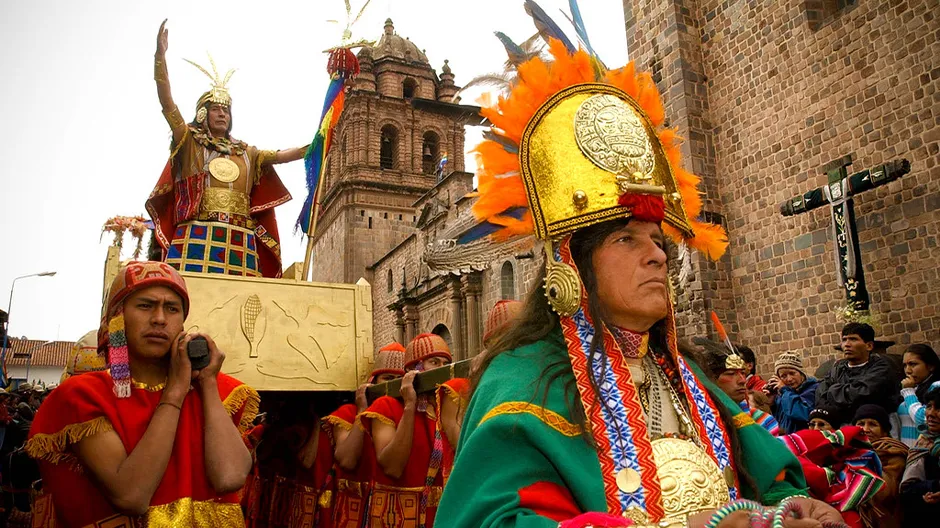
The day begins in the morning on the esplanade of the Qorikancha, the main temple of the Sun in Inca times, whose name means “golden enclosure” because its walls were once covered with gold. Here the Inca greets the Sun and makes the first offerings before the procession sets off toward the main square.
Plaza de Armas: The Encounter of Times
The second act takes place in Cusco’s Plaza de Armas, known in Inca times as Haukaypata (also written Huacaypata). It includes the coca leaf ritual and the “Encounter of Times”, in which the Inca meets the mayor of Cusco and symbolically entrusts him with the care of the city.
Sacsayhuamán: The Main Ceremony
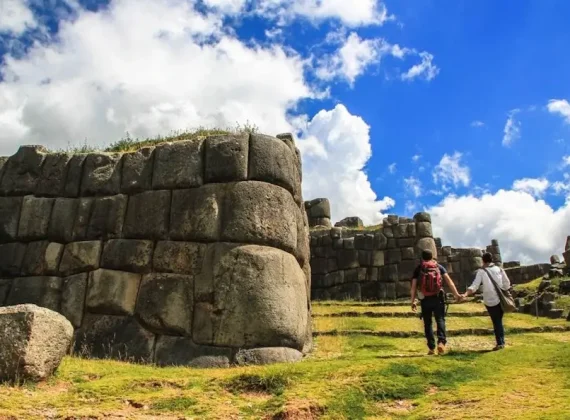
The procession then climbs to the archaeological park of Sacsayhuamán, above the city, where the main ceremony takes place on the Chukipampa esplanade. Groups representing the four suyos (regions) of the empire gather around the Inca, who addresses the Sun, and the ceremony includes the symbolic sacrifice of a llama, which today is simulated and no animal is harmed.
| Setting | What happens | Access |
|---|---|---|
| Qorikancha | Greeting to the Sun and first offerings | Limited paid seating; public viewing around the esplanade |
| Plaza de Armas | Coca ritual and Encounter of Times with the mayor | Free, with limited space |
| Sacsayhuamán | Main ceremony with the four suyos and the symbolic llama sacrifice | Paid stands; many spectators also watch from outside the stands |
Music, Costumes and Dance
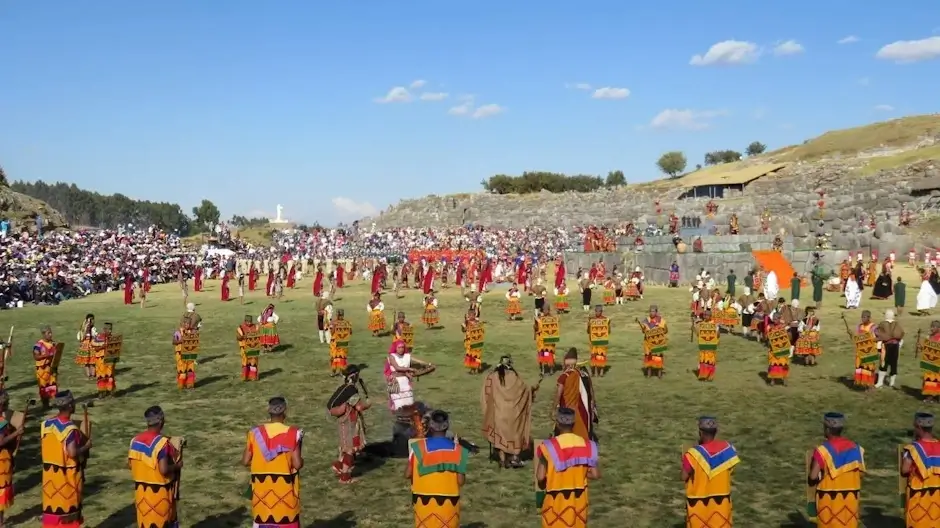
Much of Inti Raymi’s impact comes from its sound and color. Traditional Andean instruments such as the quena (flute), the charango (small string instrument), drums and the pututo (conch-shell trumpet) set the rhythm of the processions. The costumes, inspired by Inca textiles and the attire of the nobility, use bright colors and symbolic patterns, and the dances recreate scenes of Inca life, from warrior dances to agricultural rituals.
Inti Raymi Food: What to Eat During the Festival
Food is part of the celebration. In Cusco, the June festivities, especially Corpus Christi, are associated with chiriuchu, a cold dish that combines chicken, guinea pig, cured meat, sausage, roasted corn, cheese and seaweed, often accompanied by chicha de jora. Other Andean classics, such as roast guinea pig (cuy al horno) and humitas made with corn dough, are easy to find in markets and food stalls. To discover more dishes worth trying, read our guide to Peruvian food.
Planning to Attend Inti Raymi in Cusco
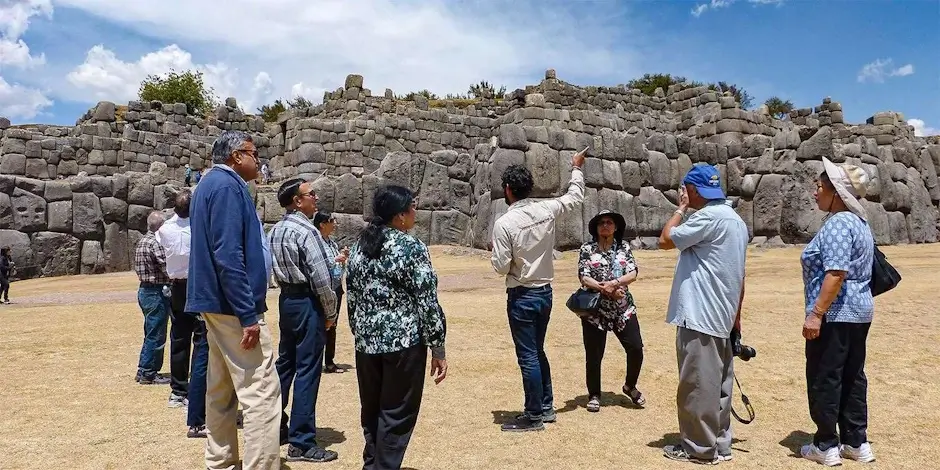
Tickets and Where to Watch
The processions and the Plaza de Armas act are free, but seats in the stands at the Qorikancha and Sacsayhuamán are sold in advance and usually sell out weeks before the festival. In recent years, Emufec has sold them only through its authorized ticketing platform and warned travelers about fake tickets, so buy only through official channels or with a trusted operator. If you prefer to have tickets, transport and a guide arranged for you, a full-day Inti Raymi tour covers the three settings in one day.
Book Early and Acclimatize
June is Cusco’s jubilee month, with parades and cultural events throughout the month, so hotels and flights fill up quickly. Cusco sits at about 3,400 m (11,150 ft) above sea level: arriving two or three days before June 24 helps you acclimatize, stay hydrated and avoid alcohol during your first days. If you are starting your trip in Lima, see the best ways to travel from Lima to Cusco.
What to Wear
June is in the middle of the dry season in the Andes: days are usually sunny, while mornings and evenings are cold. Dress in layers and bring a hat, sunglasses, sunscreen and water for a long day outdoors. To understand how June compares with the rest of the year, read our guide to the best time to visit Peru.
Combine the Festival with Machu Picchu and the Sacred Valley
Most travelers who come for Inti Raymi also visit Machu Picchu and the Sacred Valley. A four-day Inti Raymi and Machu Picchu tour fits both into a short stay in Cusco, while a five-day itinerary that adds the Sacred Valley leaves more time to explore. Before planning, check the transportation options for getting to Machu Picchu and what to see in the Sacred Valley of Peru.
Respect the Ceremony
For many people in Cusco, Inti Raymi is an act of identity, not just entertainment. Avoid pushing through the processions, follow the organizers’ instructions, ask before taking close-up photos of participants and don’t leave litter at the archaeological sites.
Frequently Asked Questions About Inti Raymi
When is Inti Raymi 2027?
Inti Raymi is held every year on June 24. In 2027 it falls on a Thursday. Schedules for each act are confirmed in the official program that Emufec publishes before the festival.
Why is Inti Raymi held on June 24 if the solstice is on June 21?
In Inca times, the festival was linked to the winter solstice, around June 21. The modern reenactment has been held on June 24 since its first staging in 1944, a date that also became the Day of Cusco and coincides with the feast of Saint John the Baptist.
How long does Inti Raymi last?
The ceremony lasts about six hours, from the morning act at the Qorikancha to the main ceremony at Sacsayhuamán in the afternoon. In Inca times, the celebration lasted several days.
Is Inti Raymi free?
Partly. The Plaza de Armas act and the processions through the streets are free. Seats in the stands at the Qorikancha and Sacsayhuamán require a ticket, and prices vary by zone and year.
Is Inti Raymi celebrated only in Cusco?
The large reenactment is held in Cusco, but other Andean communities also celebrate the June solstice with their own festivities, especially in Ecuador, where Inti Raymi is an important Indigenous celebration.
Is the llama sacrifice real?
No. In Inca times, llamas were offered to the Sun, but in the modern reenactment the sacrifice is simulated and no animal is harmed.
Want to experience the Festival of the Sun in Cusco? Contact us on WhatsApp and our team will help you plan your trip around Inti Raymi.
CONTACT US:
We are a Travel Agency specialized in tourist packages, if you need any information, do not hesitate to write to us.