

Peruvian Food: Must-Try Dishes, Desserts and Drinks
Peruvian food is the result of centuries of mixing: Andean and coastal ingredients like native potatoes, corn and ají peppers, combined with Spanish, African, Chinese and Japanese influences. That blend explains why a single trip can take you from a lime-cured ceviche in Lima to a soy-sauce stir-fry like lomo saltado and an Andean feast cooked underground with hot stones.
Geography matters just as much. Peru’s coast, Andes and Amazon each have their own produce and cooking traditions, so what you eat changes with your route. This guide covers the classic dishes worth ordering, the regional specialties to look for, Peruvian desserts and drinks, and practical tips for eating well during your trip.
Peru’s cuisine also has international recognition behind it. In 2023, UNESCO inscribed the practices and meanings associated with the preparation and consumption of ceviche on its Representative List of the Intangible Cultural Heritage of Humanity, and two Lima restaurants, Central (2023) and Maido (2025), have been named No. 1 on The World’s 50 Best Restaurants list.

What Makes Peruvian Food Different?
A handful of ingredients define the flavor of Peruvian cuisine. Once you recognize them on a menu, ordering becomes much easier:
- Ají peppers: ají amarillo (yellow chili) gives color and fruity heat to dishes like ají de gallina and causa; ají panca is a mild, smoky red pepper used in marinades; rocoto is the spiciest of the three.
- Potatoes: Peru grows thousands of native varieties. The creamy yellow potato (papa amarilla) is the base of causa and appears across the country.
- Corn: choclo (large-kernel Andean corn) and cancha (toasted corn kernels) are common sides, and purple corn is used in chicha morada and mazamorra morada.
- Limes: the small, acidic Peruvian lime is essential for ceviche and causa.
- Fusion traditions: chifa (Chinese-Peruvian) and Nikkei (Japanese-Peruvian) cooking are part of everyday Peruvian food, not niche restaurant trends.
Must-Try Traditional Peruvian Dishes
If you only have time for a few dishes, start with these four. They are found across Peru, appear on most restaurant menus and show the different influences that shaped the national cuisine.
Ceviche: Peru’s Flagship Dish
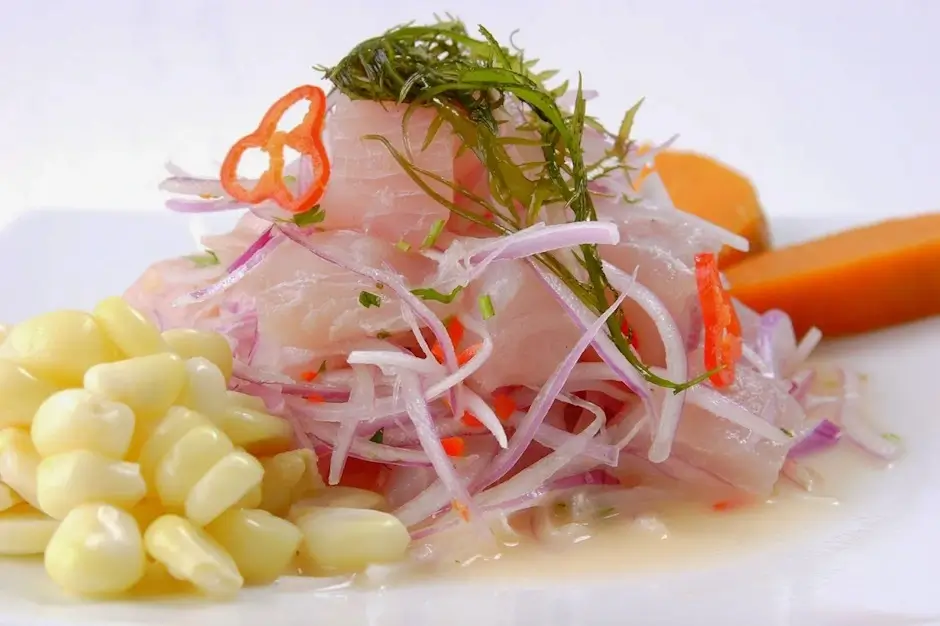
Ceviche is the dish most closely tied to Peruvian identity. Coastal peoples were eating fish seasoned with ají long before the Spanish arrived; limes and onions, introduced during the colonial period, gave the dish its modern form. Over the centuries, it kept absorbing ingredients from Peru’s cultural diversity.
Key ingredients: very fresh white fish such as corvina (sea bass), sole or grouper, cut into cubes; lime juice, whose acidity firms the fish without heat; ají amarillo or another chili; finely sliced red onion; cilantro, salt and pepper. Because the fish is eaten raw, freshness is non-negotiable.
Popular variations:
- Ceviche de conchas negras: made with black clams from the northern coast, marinated in lime, chili and cilantro.
- Ceviche mixto: fish combined with shellfish such as shrimp, squid and mussels.
- Ceviche de pulpo: cooked octopus marinated in lime.
How it’s served: usually as a starter with camote (sweet potato), choclo or cancha and lettuce. Side dishes change by region: in northern Peru it often comes with corn and yuca, while in Lima sweet potato is the standard. Ceviche is best enjoyed at lunchtime, when cevicherías serve the day’s catch.
Ceviche was declared part of Peru’s National Cultural Heritage in 2004, and the country celebrates National Ceviche Day every June 28. For styles, history and the best places to try it, read our complete guide to Peruvian ceviche.
Lomo Saltado: The Chinese-Peruvian Classic
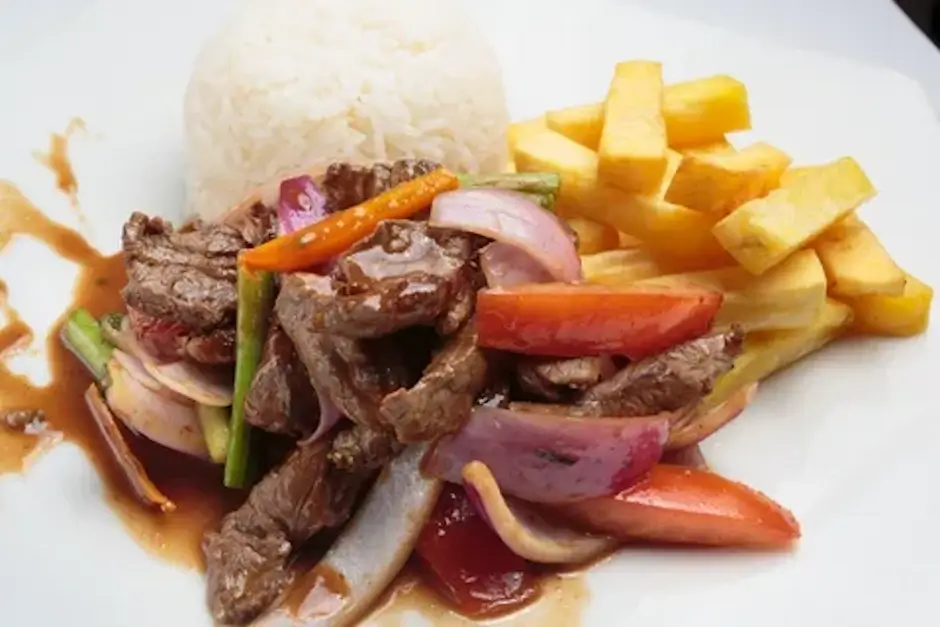
Lomo saltado is the best example of how Chinese immigration, which began in the 19th century, transformed Peruvian food. Local cooks adapted the wok stir-fry technique to Peruvian ingredients, and the result became a staple at home, in neighborhood restaurants and at celebrations.
Strips of beef tenderloin are seared over very high heat with thick slices of red onion, tomato added at the end, ají amarillo and soy sauce, then finished with cilantro. It is served hot with white rice and French fries, which are often tossed into the pan so they soak up the juices. Some versions add peppers or mushrooms, or swap the fries for golden or sweet potatoes.
Ají de Gallina: Creamy, Mildly Spicy Comfort Food

Named after the ají amarillo at the heart of its sauce, ají de gallina is one of Peru’s most comforting dishes and a favorite at family gatherings. Chicken or hen is simmered in broth, shredded and folded into a creamy sauce made with onion and garlic, yellow chili paste, milk, fresh cheese, ground nuts and bread soaked in milk or broth to thicken it.
It is served hot with white rice, hard-boiled egg and black olives, sometimes with boiled potatoes. Despite the chili, it is usually more creamy than spicy, which makes it a good first dish for travelers who are cautious about heat.
Causa Limeña: A Cold, Layered Potato Dish

Causa is made with mashed yellow potato seasoned with lime, ají amarillo, salt and oil, pressed into layers around a filling and chilled. The potato-and-chili base has pre-Hispanic roots, and lime was added during the colonial period. The origin of the name is debated: one theory links it to the Quechua word kawsay (“sustenance”), while popular stories connect it to food sold “for the cause” during Peru’s independence campaign or the War of the Pacific.
The classic causa limeña is filled with chicken or tuna mixed with mayonnaise, plus avocado; causa con mariscos uses shrimp or other seafood. It is garnished with hard-boiled egg and olives and served cold as a starter, though some restaurants serve warm versions as a main course.
More Peruvian Dishes Worth Ordering
Beyond the big four, these dishes show how much Peruvian food changes from one region to another, from Arequipa’s stuffed peppers to Andean earth-oven cooking.
Rocoto Relleno (Arequipa)

Arequipa’s signature dish is a rocoto pepper with its seeds and veins removed to tame the heat, stuffed with minced meat, onion, spices and sometimes cheese, then baked under a milk-and-egg topping. It is often served with pastel de papa, a baked potato dish. Many travelers pass through Arequipa on the way to the Colca Canyon, and its traditional picanterías are the best places to try it.
Anticuchos

Anticuchos are skewers, usually of beef heart, marinated in ají panca, vinegar, cumin and garlic and cooked over a grill. They are sold by street vendors, in markets and at festivals, typically with potato and choclo. If beef heart sounds intimidating, the texture is closer to a lean steak than most people expect.
Pachamanca (Andes)
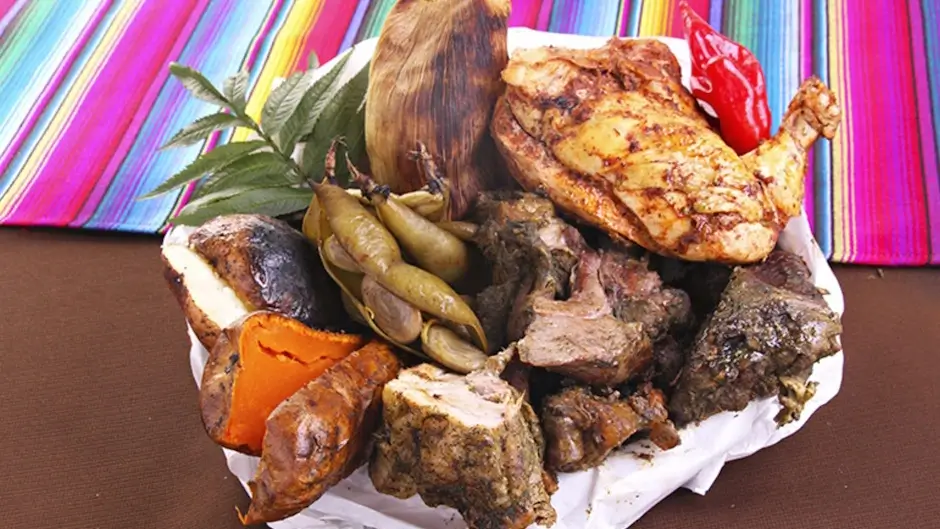
Its name means “earth pot” in Quechua. Meats such as lamb, pork and chicken are seasoned with Andean herbs and cooked underground with hot stones, together with potatoes, fava beans and other tubers. Pachamanca is traditionally prepared for festivities and family gatherings, so it is more of an occasion than an everyday meal.
Pollo a la Brasa

Peru’s rotisserie chicken is marinated with cumin, garlic, paprika and ají panca, then roasted until the skin is crisp and the meat stays juicy. It comes with French fries, salad and a selection of sauces, including ají and huacatay (Peruvian black mint). Pollerías are everywhere, which makes this an easy and reliable meal on any itinerary.
Regional Peruvian Food at a Glance
| Region | Dishes to look for |
|---|---|
| Coast (Lima, north coast) | Ceviche, causa limeña, ají de gallina, anticuchos, lomo saltado, chifa dishes such as arroz chaufa |
| Southern Andes (Arequipa) | Rocoto relleno, solterito, ocopa arequipeña, cuy chactado |
| Andes (Cusco, Sacred Valley, Puno) | Pachamanca, quinoa soup, alpaca steak, roast cuy (guinea pig), trout |
| Amazon | Juane (seasoned rice and chicken wrapped in leaves), tacacho con cecina (mashed green plantain with cured pork), tropical fruit juices |
Peruvian Desserts to Try

- Suspiro a la limeña: a rich manjar blanco base topped with meringue and a dusting of cinnamon. Very sweet, and best shared.
- Mazamorra morada: a purple corn pudding with pineapple and apple, thickened with starch or chuño (freeze-dried potato).
- Picarones: fried rings of sweet potato and squash dough, served hot with chancaca (raw cane sugar) syrup. Look for them at street stalls in the evening.
- Other classics: arroz con leche, King Kong (layered cookies with manjar blanco) and turrón de Doña Pepa, especially popular in October.
Peruvian Drinks: From Pisco Sour to Chicha Morada
- Pisco sour: Peru’s national cocktail, made with pisco, lime, sugar syrup, egg white and bitters. Learn more about the grape brandy behind it in our guide to Peruvian pisco.
- Chicha morada: a non-alcoholic drink made from purple corn, often with pineapple and spices.
- Inca Kola: the golden soft drink Peruvians pair with pollo a la brasa and chifa.
- Emoliente: a warm herbal drink sold from street carts, especially in the mornings.
- Coca tea (mate de coca): widely served in Cusco and other high-altitude destinations.
Where to Try the Best Peruvian Food
Lima is the obvious starting point. It is where ceviche, criollo cooking, chifa and Nikkei meet, and it has the widest range of options, from markets and cevicherías to fine-dining tasting menus. If you want local context with your meals, Lima culinary tours combine market visits, street food tastings and cooking classes in a single experience.
Arequipa is known for its picanterías and hearty regional cooking, while Cusco and the Sacred Valley are the places to try Andean dishes, quinoa, trout and pachamanca. Most first-time itineraries combine both sides of the country, so plan a few meals around each stop when traveling from Lima to Cusco.
Frequently Asked Questions About Peruvian Food
What is the national dish of Peru?
Ceviche is widely considered Peru’s national dish. It was declared part of the country’s National Cultural Heritage in 2004 and inscribed by UNESCO as Intangible Cultural Heritage of Humanity in 2023. Peru also celebrates National Ceviche Day on June 28.
Is Peruvian food spicy?
Generally, no. Most dishes are flavorful rather than hot: ají amarillo and ají panca add depth and color more than heat. Rocoto is the exception, and spicy sauces are usually served on the side, so you can control how much heat you add.
Can vegetarians eat well in Peru?
Yes. Good options include papa a la huancaína (potatoes in a yellow chili and cheese sauce), solterito (a bean and cheese salad from Arequipa), ocopa arequipeña, quinoa soup, choclo con queso and dishes made with native potatoes. Many restaurants in Lima, Cusco and the Sacred Valley also offer vegetarian versions of classics.
Is it safe to eat ceviche and street food in Peru?
For most travelers, yes, if you choose well. Eat ceviche at busy cevicherías at lunchtime, when the fish is freshest, and pick street stalls with high turnover where food is cooked in front of you. If you have a sensitive stomach, start with cooked dishes and ease into raw fish later in your trip.
Do Peru tours include food experiences?
Many itineraries can include them, from local market visits and cooking classes to traditional restaurants and gourmet dinners. If food is a priority for your trip, tell your travel specialist when planning so meals and culinary activities can be built into the route.
Want to plan a trip around Peruvian food? Contact us on WhatsApp and our team will help you design an itinerary that includes the dishes and food experiences you want to try.
CONTACT US:
We are a Travel Agency specialized in tourist packages, if you need any information, do not hesitate to write to us.
We offer tours in Peru and Bolivia.